
.svg)

Why Is My Grass Growing in Clumps? Causes and Solutions
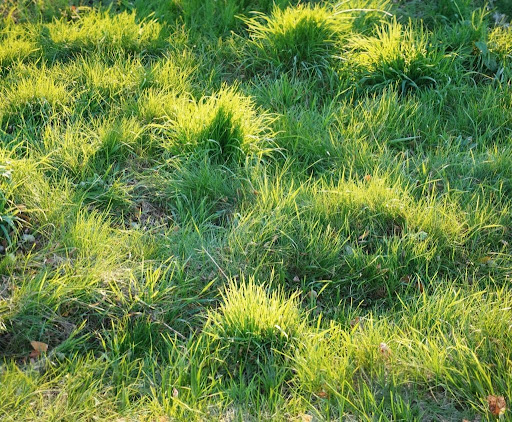
A lawn that grows in clumps instead of filling in evenly usually isn't a sign that something is broken beyond repair. It's a sign that something specific, in the grass itself, the soil beneath it, or the way it's being cared for, is driving uneven lawn growth. This guide breaks down what's actually happening when grass clumps, what causes it, and what it takes to correct and prevent it.
Key Takeaways
- Clumping grass can be caused by the grass type itself, soil conditions, thatch buildup, watering patterns, or inconsistent lawn care.
- Some grasses naturally grow in clumps rather than spreading, which isn't a problem to fix, just a characteristic to understand.
- Identifying the actual cause matters, since the right correction depends on what's driving the uneven growth.
- Left unaddressed, clumping often leads to thinning, bare spots, and increased weed pressure in the gaps.
- A professional lawn care program addresses the underlying soil, growth, and turf density issues, rather than treating clumping as a cosmetic problem.
What Does It Mean When Grass Grows in Clumps?
Clumping means grass is growing in dense, uneven tufts rather than filling in as a consistent, even surface. Between the clumps, turf is often thin, patchy, or bare. This pattern can be a natural characteristic of certain grass types, or it can be a sign that something in the lawn's growing conditions is uneven, causing some areas to thrive while others struggle to establish at all.
Common Causes of Clumping Grass

- Grass Growth Habit. Some grasses are naturally bunch-type, meaning they grow upward and outward from a central point rather than spreading horizontally to fill in bare ground. Tall fescue is a common example. In lawns seeded with a mix of grass types, bunch-type varieties can create a clumpy texture even when the lawn is otherwise healthy.
- Uneven Mowing. Mowing at inconsistent heights, or mowing over already-clumped areas without addressing the underlying growth pattern, can reinforce and worsen the clumped appearance over time.
- Poor Soil Conditions. Compacted soil, inconsistent pH, or uneven nutrient distribution across a property can cause grass to thrive in some areas and struggle in others, creating the appearance of clumping as healthy patches outpace weaker ones.
- Excess Thatch: A thick thatch layer prevents water, nutrients, and sunlight from reaching the soil evenly. Grass growing through thinner thatch areas establishes more easily than grass fighting through dense buildup, leading to uneven density across the lawn.
- Improper Watering: Inconsistent watering across a property, too much in some zones and too little in others, creates the same uneven growing conditions that drive clumped, patchy turf.
- Inconsistent Lawn Care Routine: A lawn that receives sporadic, reactive care rather than a consistent seasonal program tends to develop uneven density over time, since different areas respond differently to inconsistent treatment timing.
How to Identify the Cause of Clumping Grass
Identifying the cause starts with looking at where the clumping occurs and what's happening in those areas. To fix clumping grass, look for localized issues like soil compaction or poor drainage, while clumping across the entire lawn is more likely related to grass type or lawn care practices. Comparing affected areas with healthy turf and checking soil, thatch, and drainage can help identify the underlying cause.
Signs to Look For
- Dense, upright tufts of grass with thin or bare soil between them
- Clumping concentrated in specific zones rather than spread evenly
- Soil that feels compacted or drains poorly in clumped areas
- A visibly thick thatch layer beneath the clumps
- Clumped areas that coincide with inconsistent watering coverage
How to Fix Clumping Grass
Correcting clumping grass requires addressing the issues driving the uneven growth, rather than treating the clumps themselves as the problem. This is the kind of diagnosis-and-correction work a professional lawn care program is built around:
- Correcting mowing inconsistency. A consistent mowing height across the entire property removes one of the most common reinforcing factors behind clumped growth, allowing turf to develop more evenly over time.
- Addressing soil and thatch issues. Core aeration relieves compaction and improves the soil's ability to support even root development. Where thatch buildup is contributing to the problem, dethatching restores the conditions the grass needs to establish consistently across the lawn.
- Encouraging even growth. Overseeding bare or thin areas between clumps, paired with fertilization calibrated to the soil's actual needs, helps weaker areas catch up to the surrounding turf rather than remaining permanently behind.
- Repairing thin or patchy areas. Where clumping has already created bare patches, those areas typically need targeted seeding and soil preparation, not just time, since bare soil left alone tends to fill in with weeds before it fills in with grass.
Because clumping usually has more than one contributing factor- soil condition, thatch, watering, and grass type often overlap; correcting it effectively typically requires a coordinated approach.
How to Prevent Grass From Growing in Clumps
Preventing clumped growth long-term comes down to managing a lawn as a connected system, where soil, water, and feeding are coordinated together. This practice is achievable through a professional lawn care program that offers:
- Consistent Mowing Practices: Maintaining the same mowing height across an entire property, season after season, prevents the uneven stress patterns that contribute to clumped growth in the first place.
- Supporting Healthy, Even Growth: A lawn with strong, consistent root development is far less likely to develop the uneven density that leads to clumping. This comes from soil health and turf density being actively maintained, not left to develop on their own.
- Properly Timed Watering And Fertilization: Watering and feeding calibrated to a property's actual soil and seasonal conditions, rather than a generic schedule, keeps growth consistent across the whole lawn instead of concentrated in whatever areas happen to get more water or nutrients.
When to Consider Professional Lawn Care Services
If clumping has spread beyond a small area, keeps returning after mowing adjustments, or is accompanied by thinning and grass growing in patches, the underlying cause is likely something that needs to be diagnosed and corrected at the soil or turf level, not just managed on the surface.
How Teed & Brown approach clumping and uneven turf growth:
- On-site evaluation to identify whether grass type, soil, thatch, or watering is driving the clumped pattern
- Core aeration and dethatching where compaction or buildup is contributing to uneven density
- Overseeding and soil-calibrated fertilization to help thin areas catch up to the surrounding turf
- Coordinated watering and feeding programs designed around a property's actual conditions, not a generic schedule
- Ongoing seasonal care that prevents uneven growth patterns from reestablishing over time
If your lawn has developed a clumpy, uneven texture that hasn't improved on its own, schedule a consultation with Teed & Brown to get an accurate diagnosis and a plan built around what your lawn actually needs.
FAQs
Why is my grass growing in clumps instead of evenly?
Clumping is usually caused by a combination of factors, including grass type, soil compaction, thatch buildup, uneven watering, or inconsistent lawn care. Identifying which factor is driving it determines the right correction.
Is clumpy grass a sign of a lawn problem?
It can be, but not always. Some grass types naturally grow in a bunch-type pattern rather than spreading, which produces a clumpy texture even in a healthy lawn. Clumping paired with thinning, bare patches, or compacted soil typically does indicate an underlying issue worth addressing.
Can certain grass types naturally grow in clumps?
Yes. Bunch-type grasses, such as tall fescue, grow upward and outward from a central point rather than spreading horizontally. In lawns seeded with a mix of grass types, this can create a clumped appearance that isn't a problem to fix, just a characteristic of the seed blend.
Can uneven watering cause grass to grow in clumps?
Yes. Areas that receive more water than others tend to grow more vigorously, while underwatered areas fall behind, creating the same uneven growth pattern associated with clumping. Consistent, property-wide watering coverage helps prevent this.
Is clumpy grass linked to weeds or invasive growth?
Sometimes. Thin or bare areas between clumps are vulnerable to weed encroachment, since weeds establish quickly in open soil that healthy turf hasn't filled in. Addressing the underlying clumping issue also reduces the opportunity for weeds to take hold.
Should I be worried if my lawn starts showing clumpy areas?
Not immediately, but it's worth investigating rather than ignoring. Clumping that's isolated to a small area or consistent with a known grass type usually isn't urgent. Clumping that spreads, returns after correction attempts, or comes with thinning and bare spots is a sign of an underlying soil or care issue that benefits from a professional evaluation.
Related posts

Private Consultation for Your Property.
True lawn care is not about promises-it's about stewardship. We manage each property with intention, precision, and accountability, so you can enjoy complete confidence in who you've entrusted your landscape to.