
.svg)

What to Do After Lawn Aeration
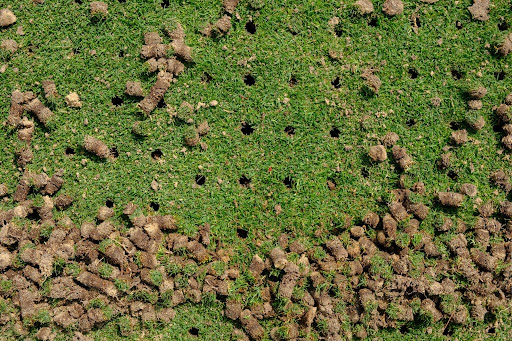
Aeration punches hundreds of small holes through your turf to reduce soil compaction and create pathways for air, water, and nutrients to reach the root zone. The process helps grass roots grow deeper and stronger while improving overall turf health. However, the work doesn’t end with removing the plugs.
Water the lawn, overseed if needed, apply any recommended fertilizer, avoid heavy foot traffic, and keep the soil consistently moist during recovery. To get the best results, it is important to follow the post-aeration care practices. Tasks such as watering, fertilizing, overseeding, and minimizing heavy traffic help the lawn recover quickly and take full advantage of the newly opened soil.
Key Takeaways
- Aeration helps loosen compacted soil by creating small holes throughout the lawn, but it is only the first step. The 48 hours after aeration are the most productive for your lawn.
- Water lightly within the first 24 hours, then keep the soil consistently moist for the next two to three weeks, especially if the lawn has been overseeded.
- Apply starter fertilizers after aeration, allowing nutrients to reach the root zone, and overseed immediately to improve seed-to-soil contact.
- Raking out soil plugs, cutting too early, and applying pre-emergent herbicides too soon are the mistakes most homeowners don't realize they're making.
- Expect color improvement within two to three weeks and full recovery by week six, but only if watering stays consistent throughout.
- Weak growth for the past three weeks, spreading bare spots, or a sudden weed surge means it's time to call a professional.
- With Teed & Brown, your post-aeration care is structured, timed, and built to deliver results that last beyond the season.
Essential Steps After Lawn Aeration
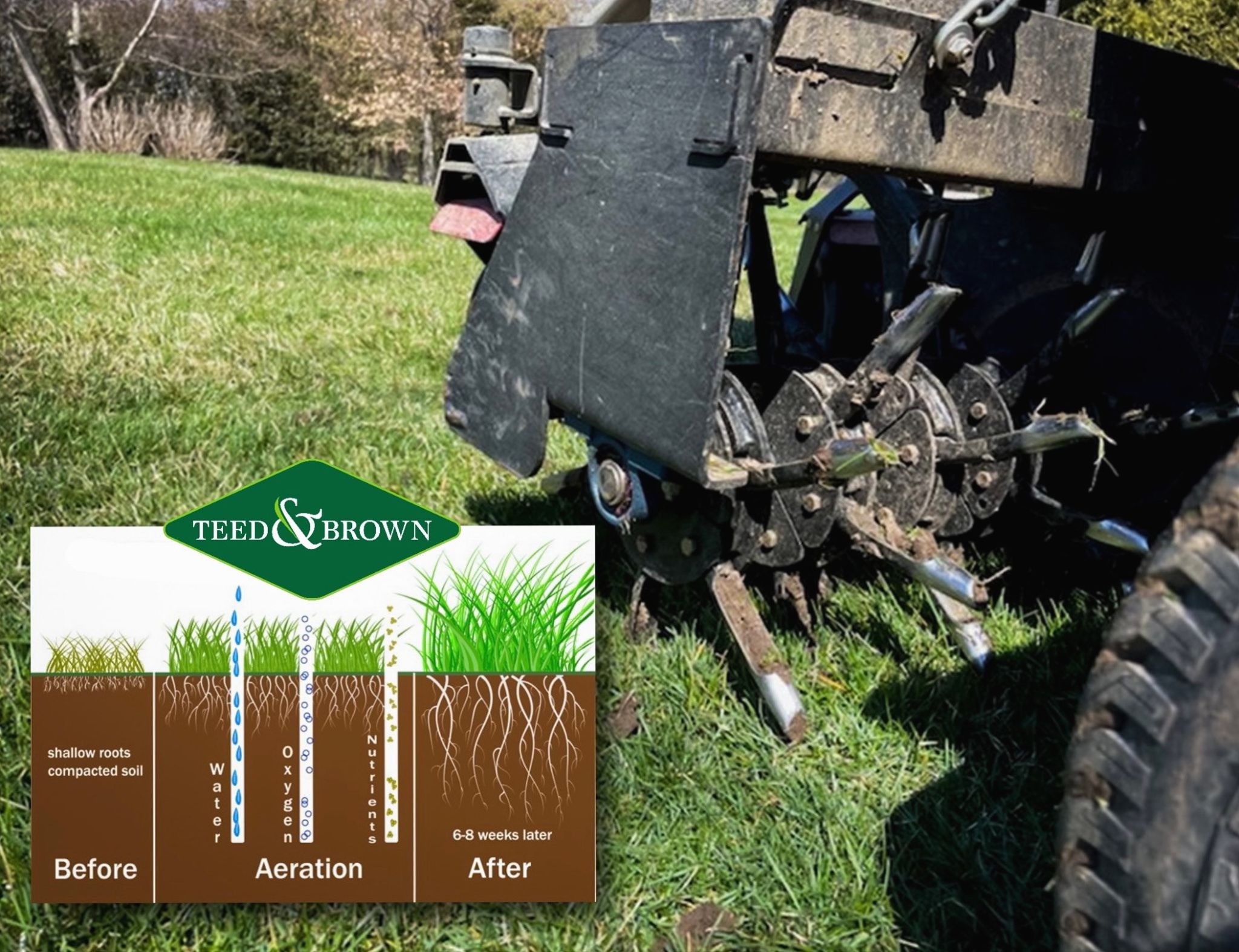
What you do in the days right after lawn aeration determines whether those open channels deliver results or go to waste. Seed, fertilizer, and water need to go in while the soil is still receptive, and foot traffic needs to stay out while roots take hold.
Water the Lawn Consistently
Water is one of the most important factors after aeration. The holes created during the process allow moisture to penetrate deeper into the soil profile, encouraging stronger root growth.
- Water lightly within the first 24 hours after aeration.
- Maintain consistent soil moisture during the first two to three weeks.
- Avoid allowing newly aerated soil to dry out completely.
Once seeds germinate, shift to deeper, less frequent watering sessions to encourage roots to grow downward.
Overseed Within 48 Hours
Post-aeration lawn care starts with overseeding while the soil is still open. The holes give seeds direct contact with the root zone, which significantly improves germination rates. Target thin or bare patches first.
Apply a Starter Fertilizer
Fertilizing after aeration works best within the same 48-hour window. If fertilization is recommended, apply an appropriate starter fertilizer after aeration. Products formulated to support root development are commonly used when overseeding is performed.
Limit Foot Traffic for 2 to 3 Weeks
Pressure on freshly aerated turf compresses the open soil channels. Keep foot traffic minimal for two to three weeks so roots can establish without stress.
Hold Off on Cutting the Grass
Wait at least three to five days before cutting the grass after aerating. This lets the soil plugs decompose and protects new seedlings from disturbance. When you do cut, avoid removing more than one-third of the blade at a time.
Mistakes Homeowners Make After Lawn Aeration
Post-aeration care is where most lawns are lost. The treatment opens your soil to air, water, and seed, but a few missteps in the weeks that follow can undo that work entirely.
- Raking Out the Soil Plugs: If a drag mat wasn't used, those cores are not debris; they hold beneficial microbes and nutrients that break back down into the turf, so leave them where they fall. If a drag mat was used, the plugs have already been broken down and worked into the soil.
- Skipping Consistent Watering: Lawn aeration aftercare depends heavily on moisture. New seed needs damp soil for two to three weeks straight. One dry spell and it dies before rooting.
- Applying Pre-Emergent Herbicides Too Soon: Crabgrass preventers block all germination, including new grass, so timing matters significantly. Hold off until the new turf has been cut several times, unless a professional is managing the timing, since Teed & Brown sequences pre-emergent and spot seeding/aeration carefully in spring without one undermining the other.
- Cutting the Lawn Too Early: New seedlings pull out before they anchor. Wait until growth hits three to four inches, then keep the blade high.
- Allowing Heavy Foot Traffic: Freshly aerated soil and new seedlings can't take repeated pressure. imit heavy foot traffic for 2–4 weeks, depending on whether overseeding was performed.
How Long Does It Take to See Results After Lawn Aeration?
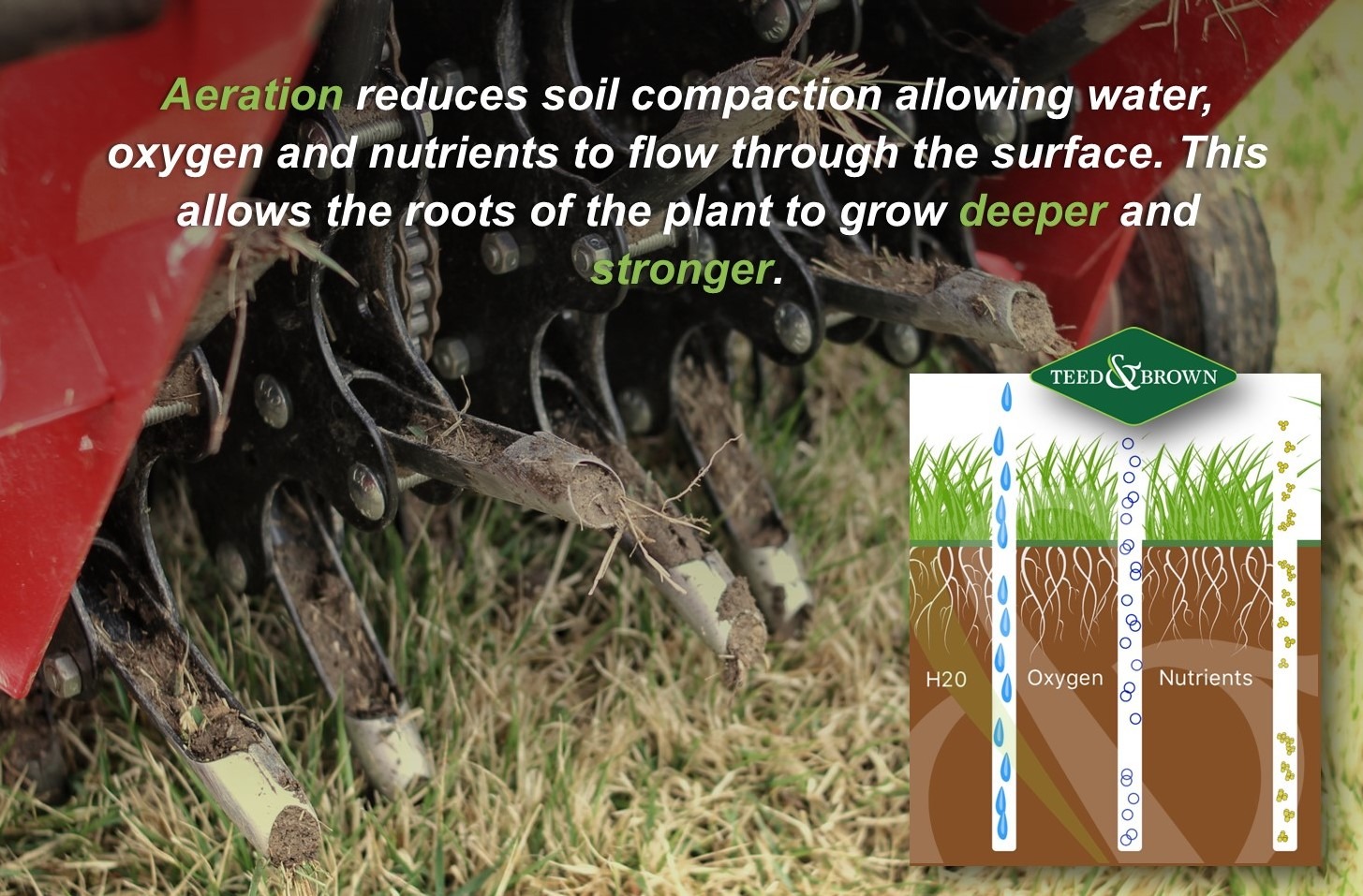
Most lawns show the first signs of improvement within 2 to 3 weeks of aeration, but the full picture takes closer to 4 to 6 weeks to develop. What you see in that window depends on how compacted your soil was, whether you overseeded, and how consistently your lawn is watered after aeration.
Weeks 1 – 2: Soil Cores Break Down, Roots Get to Work
The plugs pulled from your lawn decompose on the surface within 1 to 2 weeks, releasing nutrients directly back into the soil. Beneath the surface, roots are already drawing in more oxygen and moisture through the newly opened channels.
Weeks 2 – 3: Color Improves, Thin Spots Begin to Fill
Your lawn’s color will improve to a noticeably deeper green as fertilizer and water reach the root zone more efficiently. If you paired aeration with overseeding, germination typically begins around this point, and bare patches start to close.
Weeks 4 – 6: Full Turf Recovery
By week four, water absorption has measurably improved, and the turf reaches its peak density for the season. Root systems are deeper and stronger, which also means better resistance to heat stress and drought going into the warmer months.
When to Call a Lawn Care Professional
Most post-aeration lawn aftercare follows a predictable recovery path. But when your lawn deviates from that path, it usually signals something that watering and overseeding alone won't fix.
- No Recovery After Three Weeks: Healthy turf closes aeration holes and shows new growth within two to three weeks. If your lawn still looks weak past that point, the soil likely needs professional amendments rather than more time.
- Weed Surge After Aeration: Open aeration channels give dormant weed seeds a direct path to germinate. A sudden weed outbreak requires selective herbicide treatment timed carefully around any overseeded grass.
- Uneven or Shallow Holes: Manual core aerators often pull inconsistent plugs, leaving some areas barely penetrated. A patchy hole pattern means a professional needs to re-evaluate soil depth before the problem compounds.
- Persistent Brown Patches: Die-off that continues beyond normal post-aeration stress often points to soil fungus, deep compaction, or a nutrient deficiency that standard lawn care after aeration won't correct.
- Spreading Bare Spots: Bare areas widening after overseeding and aeration usually signal failed seed-to-soil contact or poor germination conditions. A professional can identify whether soil chemistry, watering, or seed selection is the cause.
How Teed & Brown Helps Homeowners Get Better Results After Lawn Aeration
Aeration creates a narrow window where your lawn absorbs everything more effectively. Teed & Brown structures its post-aeration lawn care services around that window to deliver results that last beyond the season.
- Premium Overseeding: Aeration holes put grass seed in direct contact with loosened soil. Teed & Brown overseeds bare and thinning areas right after aeration, giving new varieties the best possible start for a thicker, more uniform turf.
- Targeted Fertilization: Open channels let slow-release fertilizers reach the root zone without interference from surface thatch. Applied right after aeration, nutrients are available to both new seeds and existing roots throughout the recovery period.
- Compost Application: Soil structure matters as much as nutrients when establishing new grass. A post-aeration compost top-dressing, available as an add-on service, improves moisture retention, supports microbial activity, and gives developing roots a stable foundation.
- Irrigation Controller Management and Audits: Correct watering after lawn aeration determines whether seeds germinate or fail. Teed & Brown's irrigation services calibrate your watering schedule to keep seeds consistently moist without creating dry zones or runoff that disrupts establishment.
Conclusion
Aeration gives your lawn a short window where everything works better, but that window closes fast. What you put into those first few weeks, the seed, the water, the restraint to stay off the turf, directly determines whether your lawn comes back thicker or just recovers to the same baseline it started from.
Teed & Brown works within that window with precision, pairing overseeding, targeted fertilization, and irrigation calibration to make the most of every open channel in your soil. If your lawn deserves more than a routine treatment, request a consultation to book science-driven post-aeration care for your lawn.
FAQ
What should I do immediately after lawn aeration?
If a drag mat wasn't used, leave the soil plugs on the surface; they break down naturally and return organic matter to the soil. If a drag mat was part of your service, the plugs have already been broken down and worked into the soil. Either way, this is also the best time to overseed and fertilize, as the open channels improve seed-to-soil contact and nutrient absorption.
How long should I water after aeration?
Water lightly but consistently for the first two weeks, aiming for about 15 to 20 minutes per zone daily. This keeps the soil moist, helps seeds germinate, and allows nutrients to reach the root zone.
Should I fertilize after aeration?
Yes, and timing matters. Applying fertilizer right after aeration lets nutrients move directly into the soil through the holes rather than sitting on a compacted surface.
How long does it take to see results from aeration?
Most lawns show visible improvement within two to four weeks, with fuller coverage becoming more noticeable as the season progresses. If you've overseeded, expect new grass to fill in over four to eight weeks, depending on grass variety and weather.
Can weeds grow after aeration?
Weeds can take advantage of open soil, especially if bare patches are left unseeded. Overseeding immediately after aeration is the most effective way to crowd out weed growth before it gets established.
How does Teed & Brown help after lawn aeration?
Teed & Brown's post-aeration services are timed to make the most of open soil channels, from targeted fertilization to overseeding. Every treatment is applied to support stronger turf recovery throughout the season.
Does Teed & Brown offer overseeding services?
Yes. Teed & Brown's premium aeration and seeding services work together to improve airflow, nutrient absorption, and turf density. If you're planning what to do after lawn aeration, pairing it with professional overseeding is one of the most effective steps for long-term results.
Related posts
Private Consultation for Your Property.
True lawn care is not about promises-it's about stewardship. We manage each property with intention, precision, and accountability, so you can enjoy complete confidence in who you've entrusted your landscape to.