
.svg)

How Tall Should You Cut Your Grass? What Our Mowing Height Trial Revealed
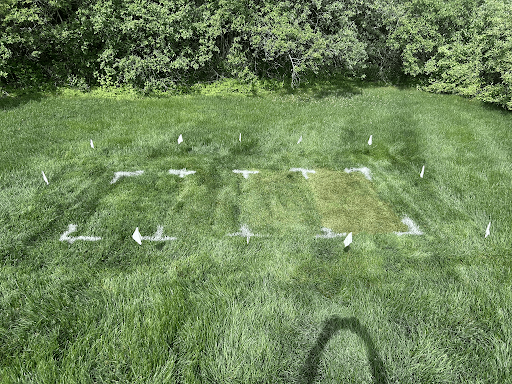
Cut your grass to 1 inch, and it will struggle. Cut it to 4 inches on the exact same lawn, same soil, and same water, and it thrives.
Knowing how tall to cut your grass is one of the most overlooked decisions in lawn care. To see how much difference it really makes, Christopher Brown, co-founder of Teed & Brown and a Penn State-trained turfgrass specialist, conducted a season-long mowing height trial at the company's Bethel, Connecticut, facility. Four sections of the same lawn were maintained at different heights: just over 1 inch, 2 inches, 3 inches, and 4 inches. Each section received the same soil conditions, sunlight, fertilization, and watering, making mowing height the only variable in the study.
The result was consistent and easy to see: lawn health improved at every height increase, with the 4-inch cut clearly outperforming the rest.
Key Takeaways
- The lawn became progressively less healthy as it was cut shorter.
- A 4-inch cut performed best. 3 inches was acceptable, 2 inches was just okay, and just over 1 inch was poor.
- Taller grass shades the soil, holds moisture, grows deeper roots, and handles heat and drought better.
- Mowing height should change with the season, not stay fixed year-round.
- Follow the one-third rule: never remove more than a third of the blade in a single mow.
How We Tested Mowing Height: A 4-Plot Lawn Trial
This original field observation is a trial to settle the mowing height question: Does mowing height really change how a lawn performs?
The patch chosen is about as ideal as it gets: excellent soil, strong cool-season grass, and a mix of sun and afternoon shade from the wooded area behind it, shade that takes the edge off during the hottest part of the day, exactly when lawns are most vulnerable to heat stress.
This area has thrived through hot, dry Connecticut summers without ever being on a regular watering schedule, largely because it's historically been kept at a 4-inch mowing height, real proof of the moisture-retention claim, not just a stated belief.
Four plots were marked off within this area, each painted and flagged for tracking throughout the season:
Plot 1 (far left): Mowed at 4 inches, the control, representing best practice
Plot 2: Mowed at 3 inches, slightly below ideal, but reasonable
Plot 3: Mowed just over 2 inches, common for many home lawns
Plot 4 (far right): Mowed at just over 1 inch; extreme, but not uncommon
The far-right plot, cut to just over an inch, mirrors something the Teed & Brown team sees on real home lawns more often than they'd like. Those lawns tend to struggle badly through summer.
Every plot received identical fertilization and pest control throughout the trial. Mowing height was the only variable, isolated as cleanly as possible so any differences between the plots could be attributed to height alone.
After roughly a month of mowing under hot, dry conditions, the results were already visible.
What the Trial Showed
The Result, In Short
- 4 inches: Looked the best of the four, matching the surrounding turf that's been kept at that height for years
- 3 inches: Acceptable
- 2 inches: Passable, but visibly behind
- 1 inch: The clear outlier, showing real stress under the exact same heat and soil, while the 4-inch plot was thriving just feet away
"The lawn gets progressively less healthy as we cut it shorter," said Christopher Brown during the trial.
Early Weeks: A Gap Already Forming
A few weeks in, with mild weather still holding, a clear pattern was already taking shape:
- 3 and 4 inches: Looked nearly identical, both healthy and green
- 2 inches: Holding on, but noticeably less vibrant
- 1 inch: Already declined to patchy brown
Would 3 inches hold up as well as 4, or would the extra inch start to matter?
First Heat: The Gap Becomes Visible
Once the first real heat arrived, with several days near 90°F and a dry stretch, the difference that mild weather had been hiding started to show. The plot cut to just over 2 inches lacked the fullness and color of the taller cuts. The 3-inch plot held up reasonably well, but the 4-inch plot was clearly ahead, deeper green and fuller across the board.
Sustained Heat: The Pattern Holds
Under continued heat and limited rainfall, the pattern stayed consistent. The 4-inch plot matched the health of the surrounding lawn it was modeled on, confirming the height that area has been maintained at for years.
Based on the trial shown so far, a 4-inch cut through the hottest months is the clearest way to protect a lawn from summer stress.
Why Taller Grass Is Healthier Grass
The visual difference in the trial traces back to a few compounding factors that all favor a taller cut.
- Deeper root systems. Longer grass blades mean more leaf surface area for photosynthesis, which fuels the plant's overall growth, including what happens below the surface. Grass maintained at a taller height consistently develops deeper root systems than grass cut short, and deeper roots can reach water stored further down in the soil profile.
- Cooler, shaded soil. Taller grass shades the soil beneath it, which slows moisture evaporation considerably. Shorter grass exposes more bare soil to direct sun, which dries out faster and heats up faster, both of which add stress to the root zone.
- Moisture retention. Those two factors compound each other. Shaded soil stays moist longer, and when it does eventually dry out, the deeper root system from a taller cut is better positioned to reach what moisture remains.
- Weed suppression. A dense, taller canopy leaves less open soil and less direct light reaching the surface, both of which make it harder for weed seeds to germinate and establish.
- Less scalping stress. Cutting grass short repeatedly removes more leaf tissue than the plant can recover from quickly, which is a stress response, not a neutral event. Each cut at the wrong height adds to a lawn's cumulative stress load going into summer.
How Often Should You Mow Your Lawn? The One-Third Rule
The one-third rule is simple: never remove more than a third of the grass blade's height in a single mow. If your target height is 4 inches, that means mowing once the grass reaches about 6 inches, not waiting until it's noticeably overgrown.
- Never remove more than a third of the blade's height in a single mow
- Target 4 inches? Mow once the grass reaches about 6 inches
- Cutting more than that shocks the plant and removes too much leaf surface at once
- It can also expose the grass crown to stress it isn't built to handle
- If a lawn has gotten significantly overgrown, lower the height gradually over two mows rather than scalping it back to the target in one pass
The calculator applies the one-third rule automatically based on the current month and your grass's current height.
Best Mowing Height by Season (Cool-Season Turf)
Mowing height isn't a fixed number. For cool-season lawns across Connecticut and the Northeast, it should shift with the season to match how the grass grows and what stress it's under.
Summer calls for the tallest cut of the year, exactly the height at which the trial's best-performing plot was maintained. Heat and drought stress peak during these months, and the extra blade height does the most work when conditions are hardest on the lawn. Late fall calls for gradually lower cuts heading into dormancy, stepped down a little at a time rather than all at once.
Mowing Height Calculator
Enter the current month and how tall your grass is right now, and it will tell you exactly where to set your mower deck, based on the one-third rule and the seasonal heights outlined above.
If your grass is already significantly overgrown, the calculator will walk you through stepping the height down gradually over two mows rather than cutting it all the way back in one pass.
What This Mowing Height Trial Means for Your Lawn
This trial reflects the same attention to detail that we bring to every lawn. If your lawn has been through a rough summer or two, Teed & Brown's lawn care services are built on the same agronomic principles demonstrated in this trial, tailored to your soil, timed to the season, and designed around how your lawn actually grows.
FAQ
How tall should I cut my grass?
For most cool-season lawns, 3 to 4 inches is the target range, with the taller end of that range reserved for summer when heat and drought stress are highest. The exact height should shift slightly by season rather than staying fixed year-round.
Is it bad to cut grass too short?
Yes, grass cut too short reduces photosynthesis, limits root depth, and accelerates soil moisture loss. In Teed & Brown's trial, the 1-inch plot showed clear stress compared to taller plots under identical conditions.
What is the one-third rule?
The one-third rule is a mowing guideline that says never remove more than one-third of the grass blade's height in a single cut. If your target height is 4 inches, mow once the grass reaches roughly 6 inches rather than letting it grow significantly taller and cutting it back all at once.
What's the best mowing height in summer?
4 inches is the recommended height for cool-season lawns during summer. The taller cut shades the soil, slows moisture loss, and supports the deeper root growth a lawn needs to handle heat and drought stress.
How often should I mow?
Most cool-season lawns need mowing every five to seven days during active spring and fall growth, and less often during summer heat when growth slows. Frequency should follow growth rate and the one-third rule, not a fixed calendar schedule.
Related posts


Private Consultation for Your Property.
True lawn care is not about promises-it's about stewardship. We manage each property with intention, precision, and accountability, so you can enjoy complete confidence in who you've entrusted your landscape to.