
.svg)

Lawn Aeration and Overseeding: Benefits, Signs, and Best Time to Do It
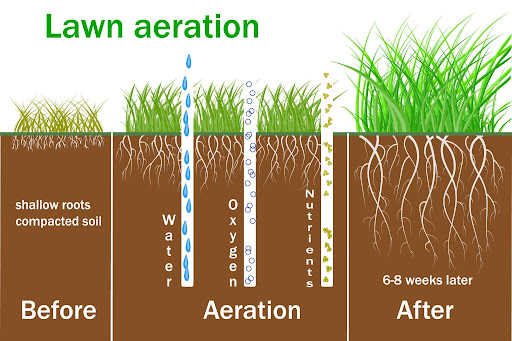
Lawn aeration and overseeding work together to improve thin, compacted, or stressed turf by opening the soil and introducing fresh grass seed into better growing conditions. Aeration relieves compacted soil by removing small plugs from the lawn, while overseeding fills bare or thinning areas with new grass varieties that can improve density, color, and resilience.
This combination is especially valuable for cool-season lawns, where grass performs best when the soil is still warm, air temperatures are cooler, and weed pressure is lower. That makes late summer through early fall the strongest window for aeration and overseeding on most properties.
Both aeration and overseeding support gradual lawn thickening by encouraging new growth while improving root-zone conditions.
Key Takeaways
- Lawn aeration creates small openings in compacted soil so air, water, and nutrients can reach the root zone more effectively.
- Core aeration is usually preferred because it removes plugs of soil instead of only pressing holes into the ground.
- Overseeding adds new grass seed to an existing lawn to improve density, fill thin areas, and introduce stronger turf varieties.
- Aeration and overseeding are most effective together because aeration improves seed-to-soil contact.
- Cool-season lawns usually respond best when aeration and overseeding are timed from mid-August through October, weather dependent.
What Is Lawn Aeration?
Lawn aeration is a soil-focused lawn care practice that removes small plugs of soil to relieve compaction and improve the movement of air, water, and nutrients into the root zone. It reduces compaction so roots can receive more oxygen, moisture, and nutrients. Compaction happens when soil particles are pressed tightly together.
When soil becomes too dense, roots have less room to expand. Water may sit on the surface, nutrients may not move deeply, and grass can become thin or weak.
Key benefits of aeration include:
- Reduces soil compaction
- Improves water absorption
- Enhances nutrient uptake
- Encourages stronger root development
- Reduces runoff and puddling
- Supports overall lawn health
The most effective form of aeration is core aeration. It removes small plugs of soil and thatch from the lawn, creating open channels in the root zone. These plugs are usually left on the surface so they can break down naturally and return organic material to the soil.
What Is Overseeding?
Overseeding involves spreading new grass seed directly into an existing lawn without removing the current turf. The goal is to increase grass density, fill thin or bare areas, improve color consistency, and introduce stronger grass varieties better suited to local conditions.
Overseeding helps rejuvenate aging lawns while reducing opportunities for weeds to establish themselves. Benefits of overseeding include:
- Fills bare and thinning areas
- Improves lawn thickness
- Enhances color and appearance
- Increases resistance to disease and pests
- Reduces weed invasion
- Promotes a more uniform lawn
Why Aeration and Overseeding Should Be Done Together
Aeration and overseeding should be done together because aeration creates the perfect conditions for new grass seed to germinate. The small holes left by core aeration help seed settle into the soil, where moisture, nutrients, and protection are better than on the surface.
This combination improves results in several ways:
- Better seed-to-soil contact: Grass seed needs direct contact with soil to germinate well. Aeration opens the surface so more seed reaches the root zone instead of staying above compacted soil or thatch.
- Improved moisture access: Aeration channels allow water to move deeper into the soil. That helps both existing turf roots and new seedlings access moisture more effectively.
- Stronger root development: When compaction is reduced, young roots have more space to grow downward. Deeper roots support better drought tolerance and seasonal recovery.
- More even turf density: Overseeding after aeration helps fill thin areas across the lawn rather than only improving isolated patches.
- Reduced weed opportunity: Thick turf leaves less open space for weed seeds to establish. Aeration and overseeding do not replace a full lawn care program, but they can support a denser lawn that is less vulnerable to weed pressure over time.
Signs Your Lawn Needs Aeration and Overseeding
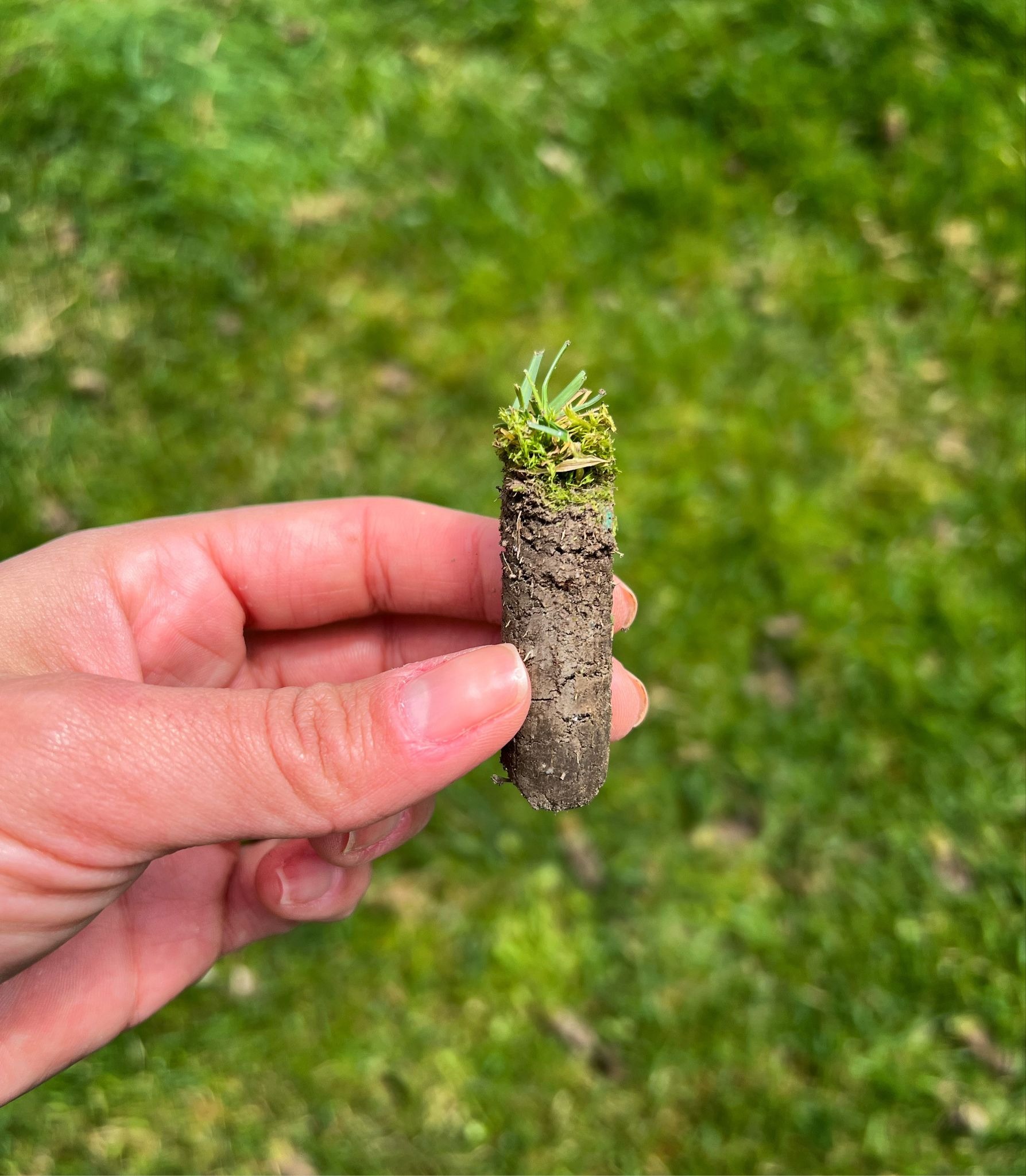
A lawn may need aeration and overseeding when it shows signs of compaction, thinning, poor water movement, or weak root growth. These problems often appear together because compacted soil limits root performance, and weak turf creates more open space.
Common signs include:
- Hard soil: If the lawn feels firm underfoot and water has trouble soaking in, the soil may be compacted.
- Thin or patchy turf: Bare areas, yellowing patches, and uneven growth can indicate that the existing grass is struggling to recover.
- Water pooling or runoff: When rain or irrigation sits on the surface instead of entering the soil, compaction may be limiting infiltration.
- Heavy-use areas: Walkways, play zones, pet paths, and shaded areas often thin faster than the rest of the property.
- Thick thatch: A small thatch layer can be normal, but excessive thatch can block water, oxygen, and nutrients from reaching the soil.
- Slow seasonal recovery: If the lawn does not bounce back after summer stress, aeration and overseeding may help restore density before winter.
The Best Time to Aerate and Overseed Cool-Season Lawns
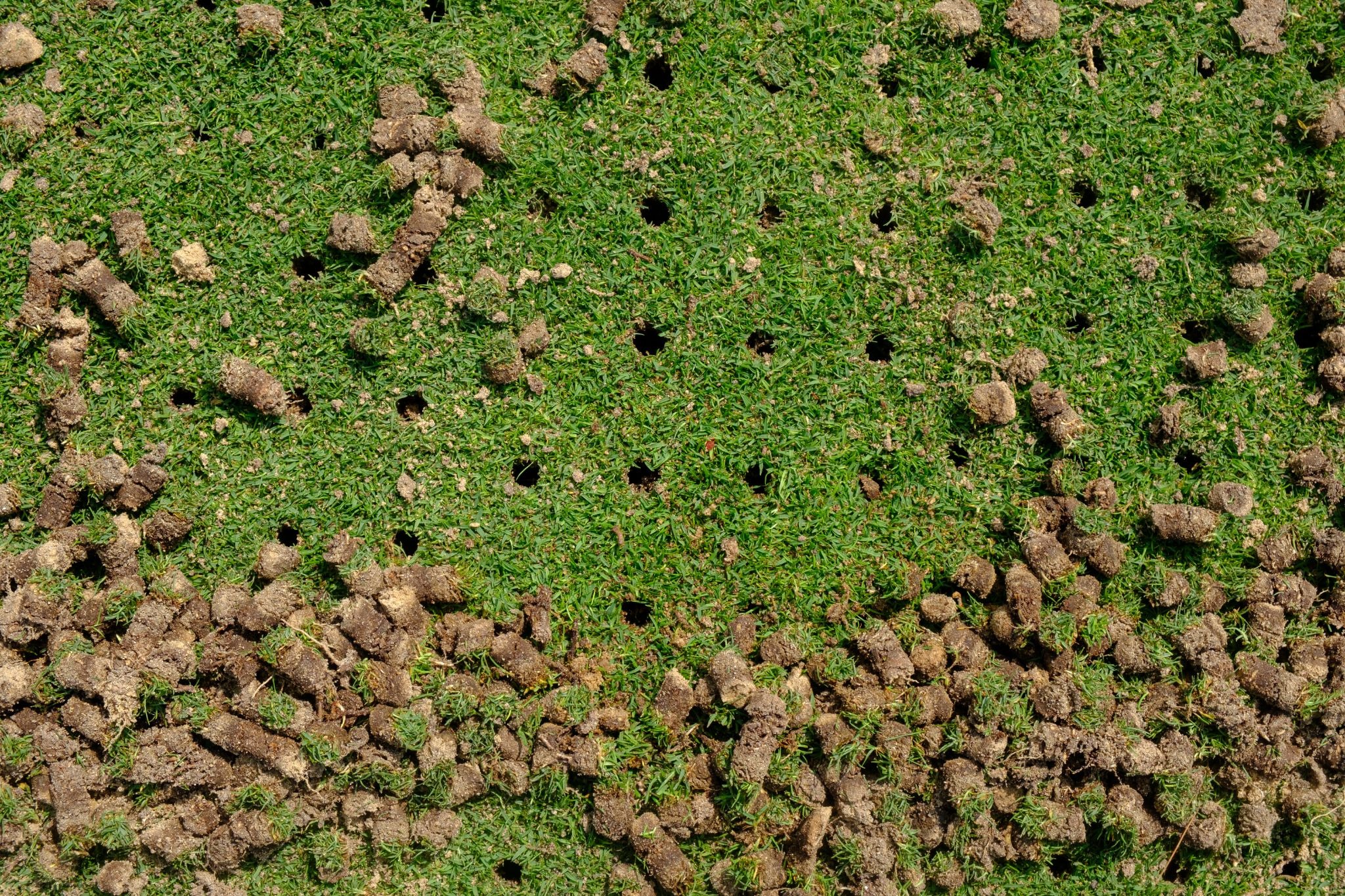
For cool-season lawns, early fall is the ideal time to aerate and overseed. The period from August through fall offers the best combination of warm soil temperatures, cooler daytime conditions, increased moisture, and reduced weed competition.
During this window, grass can establish strong roots before winter dormancy while avoiding the heat stress common during summer. Fall-seeded lawns also benefit from a longer establishment period, leading to thicker, healthier turf the following spring.
Why Fall Is the Best Time
- Warm soil encourages faster seed germination.
- Cooler air temperatures reduce stress on young seedlings.
- Increased rainfall helps maintain consistent soil moisture.
- Fewer annual weeds compete with the new grass.
- Roots continue developing well into autumn.
Can You Aerate and Overseed in Spring?
Spring aeration and overseeding can be successful when necessary, typically between March and May. While fall provides the ideal conditions for cool-season grass establishment, spring can be a practical option for lawn renovation and lawn restoration projects, particularly when a lawn has suffered winter damage, thinning turf, bare spots, or other signs of decline.
When Teed & Brown performs spring aeration and overseeding, the focus is typically on spot treatment, shaded areas, damaged sections, and thinning patches, rather than the entire lawn. Fall is when the full property receives a complete aeration and overseeding.
However, spring-seeded grass must compete with increased weed pressure and may encounter summer heat before roots are fully established. For this reason, most lawn care professionals recommend reserving major aeration and seeding projects for fall whenever possible.
By scheduling aeration and overseeding during the fall growing season, property owners give their lawns the greatest opportunity to develop deeper roots, thicker turf coverage, and stronger resistance to weeds, drought, and disease.
The Professional Aeration and Overseeding Process
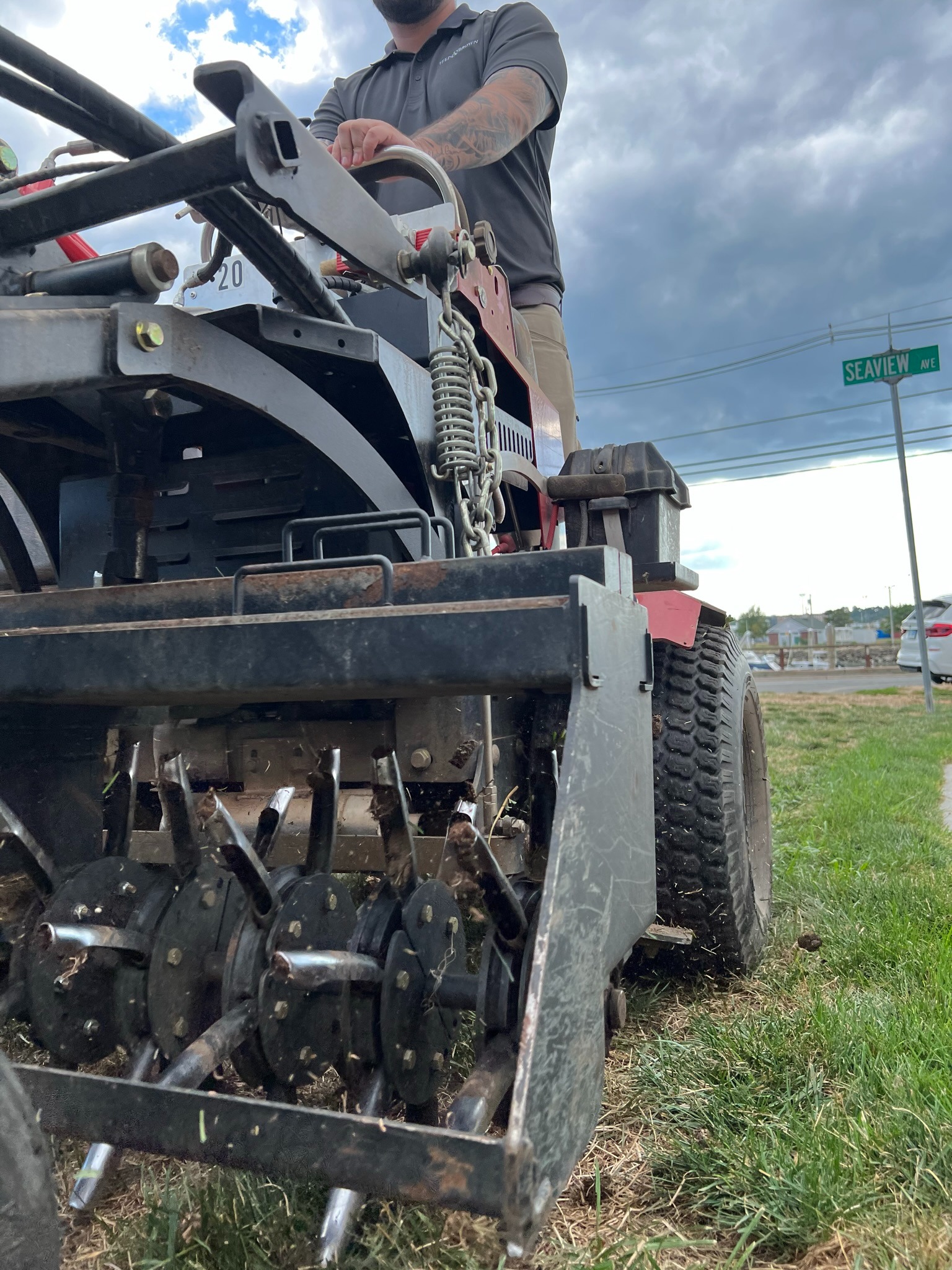
Professional aeration and overseeding are a coordinated lawn care service, not just two separate steps. The best results come from evaluating turf condition, preparing the lawn surface, opening the soil, applying the right seed blend, and supporting germination with proper follow-up care.
YT Video: Grass Seed Germination 101
1. Lawn Evaluation
A professional visit starts with understanding the lawn’s condition. The team may look at soil compaction, thin areas, drainage patterns, shade, turf density, and seasonal stress. This helps determine whether aeration and overseeding are appropriate and where the lawn needs the most attention.
2. Property Preparation
Before core aeration, sensitive property features may need to be identified. Irrigation heads, shallow lines, lighting, pet boundaries, and other hidden elements should be flagged so equipment can move across the lawn safely.
The turf surface should also be prepared, so the seed has a better chance of reaching the soil and receiving light. Excess debris or heavy organic buildup can interfere with seed placement.
3. Core Aeration
During core aeration, a machine pulls small plugs of soil from the lawn. These openings usually reach several inches into the soil, depending on soil conditions and equipment settings.
4. Overseeding
Overseeding is completed immediately after aeration so the seed can settle into the fresh openings. This timing is important because aeration holes act like small seed pockets, improving contact with moist soil and helping protect the seed from drying out or shifting on the surface.
Seed selection should match the property. Sunny lawns, shaded areas, high-use spaces, and drought-stressed areas may need different seed blends.
5. Drag Mat Application
In most cases, this step follows overseeding with a drag mat pass across the lawn. Dragging breaks up the soil plugs left by aeration, distributes that soil evenly across the surface, and helps work the new seed into the soil for better seed-to-soil contact. Not every property requires this step, but it's used on the majority of lawns to improve seed placement and accelerate even germination.
6. Nutrient Support
A starter lawn treatment may be paired with overseeding to support early root development. The goal is to help new seedlings establish quickly and strengthen the existing turf at the same time.
7. Post-Service Care Guidance
After aeration and overseeding, results depend heavily on the first few weeks of care. The new seed needs consistent moisture, reduced traffic, and enough time to establish before routine turf care resumes.
What Results Can Property Owners Expect?
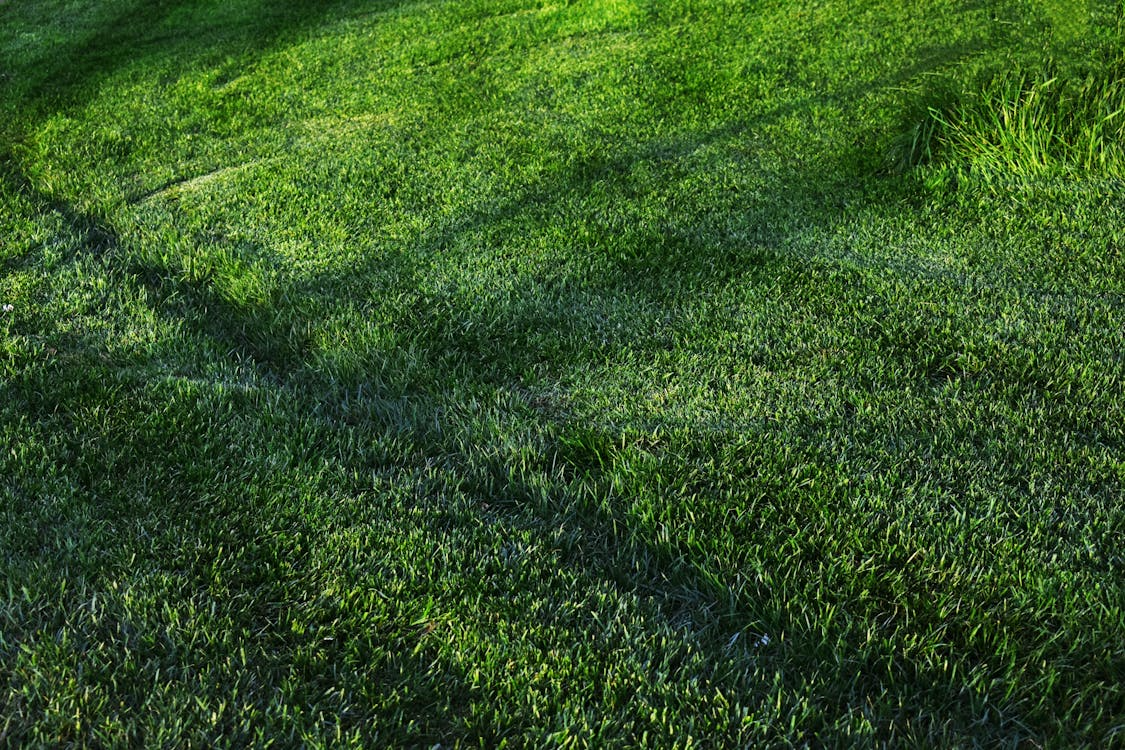
Property owners can expect gradual improvement after aeration and overseeding. The lawn will not become fully thick overnight, but the process can support better soil structure, stronger root growth, and improved turf density over time.
Short-Term Results: First 1-3 Weeks
If a drag mat is used, seed-to-soil contact is improved, and the lawn typically appears more even. Without a drag mat, soil plugs remain on the surface until they naturally break down over the following weeks.
YT video: Speed of seed growth
Medium-Term Results: 2-3 Months
As seedlings mature, thin areas begin to fill in. The lawn may appear greener and more uniform, especially where seed-to-soil contact was strong. Root systems also begin extending deeper into loosened soil, which helps the turf handle seasonal stress more effectively.
Long-Term Results: 1-2 Growing Seasons
The strongest results often appear over multiple growing seasons. Repeated seasonal care can improve turf density, reduce bare soil exposure, and support a lawn that is more resilient against drought stress, traffic, weeds, and disease pressure.
How to Care for Your Lawn After Aeration and Overseeding
After aeration and overseeding, the goal is to protect the seedbed and keep the top layer of soil consistently moist while seedlings establish.
- Leave the soil plugs in place if a drag mat wasn't used. The small cores left after aeration should remain on the lawn. They break down naturally and return soil material to the surface.
- Keep the seed moist. Newly seeded areas need light and frequent watering. The top layer of soil should stay damp but not saturated. Once seedlings are established, watering should gradually shift toward deeper, less frequent cycles to encourage deeper roots.
- Limit traffic. Newly seeded areas should be protected from heavy use while seedlings are tender. Pets, children, and repeated foot traffic can disturb seed placement and damage young grass.
- Delay routine cutting. Allow new grass to reach a stable height and root securely before regular cutting resumes. Cutting too early can pull or weaken young seedlings.
- Avoid early weed-control treatments. Weed-control applications should be timed carefully around new seed. Young grass needs time to mature before certain lawn treatments are introduced.
- Follow professional guidance. Every lawn has unique growing conditions, which is why professional aeration and overseeding services provide tailored aftercare plans. Following the recommended watering, cutting, and maintenance schedule helps ensure the best possible results.
Why Homeowners Choose Teed & Brown?
Lawns need care that fits local soil conditions, turf density, weather patterns, and the cool-season grass cycle. Teed & Brown provides premium, professional lawn care for homeowners across Connecticut, New York, and New Jersey, including services that help improve thin, compacted, or stressed lawns.
Teed & Brown’s lawn care approach can support:
- Core aeration for compacted soil
- Overseeding for thin or patchy turf
- Lawn treatments, including fertilization and weed control
- Grub control where appropriate
- Tick control for outdoor property comfort
- Turf evaluations during scheduled service visits
Schedule a Teed & Brown lawn care visit today to improve thin grass, support healthier roots, and prepare your lawn for stronger seasonal growth.
Conclusion
Lawn aeration and overseeding work best when they are planned together. Aeration opens compacted soil, improves root-zone access, and creates better seed placement. Overseeding fills thin areas with fresh grass varieties that can improve density, color, and resilience.
For cool-season lawns, early fall is the strongest window because warm soil, cooler air, and lower weed pressure create better conditions for grass establishment. When combined with proper aftercare and scheduled lawn treatments, aeration and overseeding can help build a thicker, healthier lawn from the soil up.
FAQs
Is aeration and overseeding worth it?
Yes. Aeration and overseeding improve soil health, increase turf density, strengthen root systems, and help reduce weeds. Together, they provide one of the most effective ways to rejuvenate thin, stressed, or aging lawns.
How often should a lawn be aerated?
Most cool-season lawns benefit from annual fall core aeration. Lawns with heavy clay soil, poor drainage, or frequent foot traffic may also benefit from additional spring spot aeration when needed.
When is the best time to aerate and overseed cool-season lawns?
The best time to aerate and overseed cool-season lawns is generally mid-August through October, weather dependent. This gives grass seed time to germinate and establish before colder soil slows growth.
How long does it take to see results after overseeding?
Grass seed often begins germinating within 7 to 21 days, depending on the seed variety and weather conditions. Fuller results usually develop over several months as seedlings mature and spread into thin areas.
Can aeration fix a patchy lawn?
Aeration can help patchy lawns when compaction is part of the problem, but overseeding is what adds new grass to thin or bare areas. The two processes give the strongest results when done together.
Does Teed & Brown provide aeration and overseeding services?
Yes. Teed & Brown provides professional lawn care services across Connecticut, New York, and New Jersey, including aeration and overseeding as part of a turf-focused approach for thin, compacted, or stressed lawns.
What areas does Teed & Brown serve for aeration and overseeding?
Teed & Brown serves homeowners across Connecticut, New York, and New Jersey, with Connecticut service areas including Fairfield County, Hartford County, Litchfield County, and other established communities.
Does Teed & Brown offer ongoing lawn care after overseeding?
Yes. Teed & Brown offers scheduled lawn care services after overseeding, including lawn treatments, weed control, grub control where appropriate, tick control, and property-based evaluations during service visits.
Related posts
Private Consultation for Your Property.
True lawn care is not about promises-it's about stewardship. We manage each property with intention, precision, and accountability, so you can enjoy complete confidence in who you've entrusted your landscape to.