
.svg)

Benefits of Aerating Your Lawn for Healthier Grass and Stronger Growth
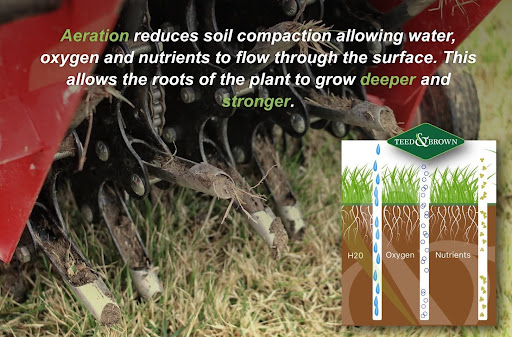
The primary benefits of aerating your lawn include stronger root development, better nutrient absorption, and lasting relief from soil compaction. Foot traffic, mowing equipment, and heavy clay soils gradually compact the soil, limiting the movement of air, water, and nutrients. Aeration opens direct pathways for oxygen, moisture, and nutrients to feed the root zone.
The results show up quickly in turf that was previously thin or struggling. Grass fills in because the root system finally has room to expand and consistent access to essential resources. That shift from patchy coverage to dense, resilient growth is what makes aeration one of the highest-return steps in a professional lawn care program.
Key Takeaways
- Core aeration relieves soil compaction, improving the movement of air, water, and nutrients through the soil.
- Better water infiltration and nutrient uptake support healthier root growth.
- Aeration paired with overseeding helps fill thin areas and improve lawn density.
- Moderate thatch breaks down more effectively after aeration, improving soil health over time.
- Annual aeration helps lawns recover from drought, foot traffic, and seasonal stress.
- Professional aeration provides the best results for compacted, clay-heavy, or high-traffic lawns.
7 Benefits of Aerating Your Lawn
- Improves Soil Health and Reduces Compaction
Core aeration removes small soil plugs to relieve compaction and restore pore space, allowing air, water, and nutrients to move more freely through the soil.
- Relieves Soil Compaction: Core aeration removes small soil plugs, creating pore space that allows air, water, and roots to move more freely through the soil.
- Improves Soil Structure: Repeated aeration helps maintain a looser soil profile, reducing the risk of severe compaction caused by foot traffic and heavy clay soils.
- Enhances Water Absorption in the Lawn
Core aeration creates open channels that direct moisture straight to the root zone, making it one of the most immediate lawn aeration benefits for properties across the New York Tri-State area.
- Reduces Surface Runoff: Aeration channels direct rainfall downward into the soil profile, preventing the loss of topsoil, fertilizer, and organic matter.
- Improves Drainage in Clay-Heavy Soil: Dense clay traps water near the surface and stresses root systems, but aeration opens pathways that allow excess moisture to drain.
- Improves Soil Moisture Distribution: Water infiltrates more evenly through aerated soil, reducing dry spots and helping moisture reach a larger portion of the root zone.
- Promotes Thicker and More Even Grass Growth
Core aeration benefits your lawn through improved turf density. Loose soil allows roots to spread and fill gaps that previously stayed bare or thin.
- Root Expansion Below the Surface: Aeration channels allow roots to grow deeper and wider, increasing grass plants per square foot across your lawn.
- Bare Spot Recovery: Compacted soil blocks new growth in thin areas. Aeration paired with overseeding gives seed direct soil contact, so new grass fills those weak zones faster.
- Natural Weed Resistance: Dense turf leaves less open soil for crabgrass, clover, and other weeds to establish. A thick lawn built through professional aeration crowds out opportunistic growth on its own.
- Helps Nutrients Reach Grass Roots More Effectively
Compacted soil blocks fertilizer from reaching the roots that need it. Core aeration opens direct channels into the root zone, so each application penetrates the soil instead of sitting on the surface.
- Deeper Fertilizer Penetration: Aeration channels let granular and liquid fertilizers travel below the surface into the root zone, where absorption happens.
- Reduced Surface Waste: Fertilizer applied to compacted soil often washes away as runoff before it can reach the roots. Aerated soil absorbs and retains more of each treatment, making it one of the most measurable lawn aeration benefits.
- Stronger Microbial Activity: Oxygen from aeration fuels soil microorganisms that convert organic matter into plant-available nutrients.
- Better pH Amendment Absorption: Lime and sulfur penetrate deeper after core aeration, adjusting pH throughout the root zone rather than only at the surface.
- Reduces Thatch Buildup in the Lawn
Thatch buildup beyond half an inch blocks water, air, and nutrients from reaching your root zone. Core aeration helps manage moderate thatch by improving oxygen movement into the soil, encouraging microorganisms to gradually break it down. It does not remove heavy thatch layers directly.
- Encourages Natural Thatch Breakdown: Improved oxygen movement into the soil supports beneficial microorganisms that gradually break down moderate thatch over time, helping improve soil health.
- Better Airflow to the Root Zone: Oxygen-rich channels created by aeration fuel the biological processes that break down dead plant material before it can accumulate.
- Improves Lawn Recovery from Stress and Damage
Summer heat, foot traffic, and weather shifts compact the soil and weaken turf at the root level. One of the key benefits of aerating your lawn is how it speeds recovery by restoring access to air, water, and nutrients where damaged roots need them most.
- Drought and Heat Recovery: Cool-season turf across the New York Tri-State area often enters summer stressed and water-starved. Lawn aeration benefits recovery by breaking through compacted soil so water penetrates deeper into the root zone.
- Foot Traffic and Surface Wear: High-use areas around patios, walkways, and play spaces compress the soil and thin out turf over time. Core aeration benefits these zones by loosening the ground and giving roots room to re-establish.
- Seasonal Transition Support: Fall aeration paired with overseeding gives your lawn a recovery window before winter dormancy. The plugs removed during aeration improve seed-to-soil contact when combined with overseeding, and cooler temperatures support faster germination.
- Increases Lawn Resistance to Weeds and Pests
One of the key lawn aeration benefits is turf that defends itself. Dense, well-rooted grass leaves little room for weeds to germinate and makes the surface less hospitable to common pests across the Tri-State area.
- Weed Suppression: Aeration promotes deeper root spread and tighter growth, which fills in the bare patches where crabgrass and dandelions typically take hold.
- Improved Recovery From Grub Damage: Stronger root systems help lawns recover more effectively from grub damage.
When to Consider Professional Lawn Aeration Services?
Some lawn conditions need more than routine care to correct. Lawn aeration fixes these problems below the surface, but the situations listed here call for professional equipment, trained assessment, and precise timing.
- Compacted or Clay-Heavy Soil: Dense clay resists root growth and requires professional core aerators that pull plugs two to four inches deep, not spike tools that press soil sideways and worsen compaction.
- Heavy Foot Traffic: Regular use from children, pets, or gatherings compresses soil unevenly, and a professional service adjusts pass frequency across high-impact zones rather than treating the entire lawn uniformly.
- Excess Thatch Buildup: The benefits of aerating your lawn include breaking through thick thatch that blocks moisture and nutrients, but accurate plug depth and thatch assessment require trained evaluation.
- Water Pooling or Runoff: Puddles after rain signal soil that can no longer absorb water. A professional technician identifies whether compaction, grading, or both are causing the drainage failure before correcting it.
- Persistent Thinning: Compacted soil traps nutrients at the surface, which is why lawn aeration is important for lawns that plateau despite consistent treatment. Professional service pairs core aeration with overseeding and fertilization for full recovery.
- Fall Preparation: Cool-season grasses across Connecticut, New York, and New Jersey respond best to fall aeration. Professional lawn aeration services time this window with overseeding so new seed drops into open plugs for stronger germination and denser spring growth.
Aeration delivers real results only when the timing, seed, and equipment are right, and that's exactly where Teed & Brown earns its reputation across Connecticut, New York, and New Jersey. Get in touch with us and build a lawn care program around what your soil actually needs.
FAQs
Can lawn aeration improve water absorption?
Yes. Core aeration creates channels in compacted soil that allow water to reach the root zone instead of pooling on the surface or running off. Your lawn absorbs moisture more efficiently, which means less waste and stronger turf over time.
Is lawn aeration beneficial for all grass types?
Yes. The cool-season grasses used across Connecticut, New York, and New Jersey all respond well to aeration. Fescue, bluegrass, and ryegrass blends all benefit from reduced compaction and better airflow around the roots, especially on properties with heavy foot traffic or clay soil.
How long do the benefits of lawn aeration last?
The benefits of lawn aeration generally last about one year. However, heavy clay soils and high-traffic lawns may become compacted more quickly, making annual aeration the best way to maintain healthy soil and strong turf.
Does professional lawn aeration provide better results?
Yes. Professional-grade core aerators pull deeper, more consistent soil plugs than most consumer equipment, improving compaction relief across the lawn. A trained technician also adjusts aeration depth, spacing, and timing based on your soil conditions, helping maximize improvements in water infiltration, root growth, and overall lawn health.
Why choose Teed & Brown for lawn aeration services?
Teed & Brown pairs aeration with overseeding using a custom cool-season blend matched to your property, often finishing with a drag mat pass to work seed into the soil for stronger establishment.
Private Consultation for Your Property.
True lawn care is not about promises-it's about stewardship. We manage each property with intention, precision, and accountability, so you can enjoy complete confidence in who you've entrusted your landscape to.