.svg)

Signs of Lawn Grubs and How to Protect Your Grass From Damage

Summer lawn stress can come from more than just heat and drought. Certain pests and diseases become more prevalent during the warmer months, including grubs and chinch bugs. Among these threats, grubs can be especially damaging because they feed on grass roots beneath the soil surface.
Recognizing the early signs of lawn grubs can help prevent widespread turf decline and costly lawn repairs. In this guide, we'll cover the most common lawn grub infestation signs, the damage grubs can cause, and how professional lawn care treatments can help protect your grass.
Key Takeaways
- Grubs are root-feeding beetle larvae that can weaken turf from below the soil surface.
- Brown patches, loose grass, and increased animal activity are common lawn grub infestation signs.
- Grub damage often becomes more noticeable during late summer and periods of drought stress.
- Severe infestations can cause extensive root damage and large dead areas throughout the lawn.
- Professional lawn care programs help prevent, evaluate, and manage grub activity while supporting long-term turf health.
Common Signs of a Lawn Grub Infestation
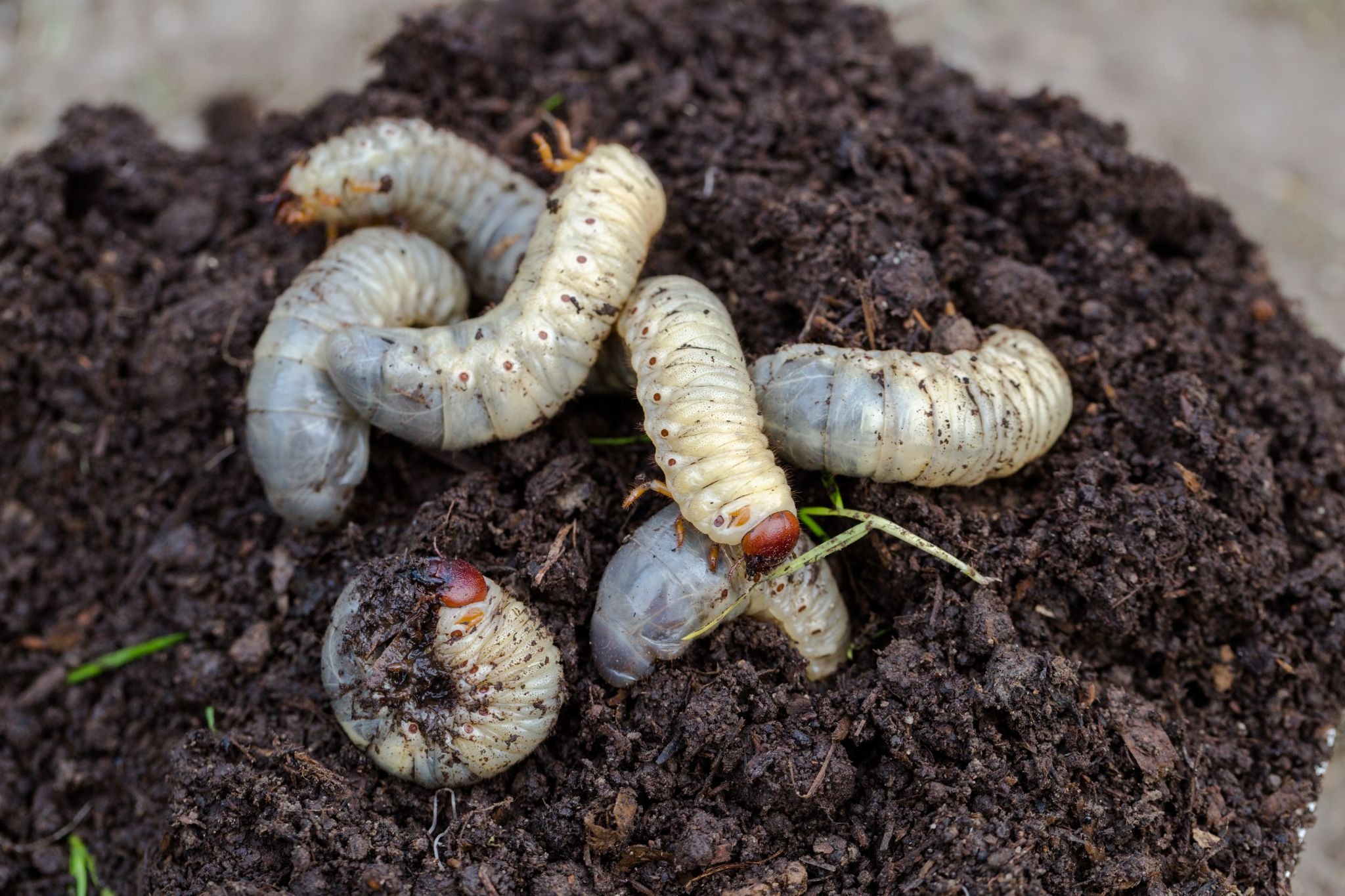
Grubs spend most of their life cycle beneath the soil surface, feeding on grass roots. While healthy lawns can often tolerate small grub populations, larger infestations can cause significant damage and weaken turf throughout the growing season.
Understanding the most common signs of lawn grubs can help homeowners identify issues before extensive turf loss occurs.
- Brown and Discolored Grass Patches
One of the most common signs of grub damage in lawn areas is the appearance of irregular brown or yellow patches. As grubs consume roots, grass loses access to the water and nutrients needed for healthy growth.
Damage often becomes more noticeable during late summer and early fall when grub feeding activity is at its highest. Damaged roots cannot effectively absorb moisture; affected areas may resemble drought stress even when irrigation is adequate.
Over time, these dead patches in the lawn from grubs can expand and merge into larger sections of weakened turf.
- Spongy or Weak Turf Conditions
Healthy turf should feel firm and well-anchored to the soil. When grubs feed extensively on root systems, the lawn may begin to feel soft, spongy, or unstable underfoot.
These weakened areas often indicate that roots have been damaged beneath the surface and are a sign that the lawn's overall endurance has been compromised.
- Grass Pulling Up Easily From the Soil
Among the most recognizable symptoms of grubs in grass is turf that lifts away from the soil with little effort. As grubs consume the roots that anchor grass in place, affected areas may separate easily when gently pulled.
In severe infestations, the lawn may roll back almost like a loose carpet because the root system has been destroyed. This typically indicates extensive feeding activity beneath the soil surface.
- Increased Bird and Animal Activity on the Lawn
Birds, raccoons, skunks, and other animals often dig into lawns searching for grubs as a food source. If your lawn shows increased animal activity, small holes, or disturbed turf, it can be an early warning sign of grub populations below the surface.
In some cases, damage caused by animals searching for grubs becomes more noticeable than the grub feeding itself.
Lawn Damage Caused by Grubs
Grubs affect more than the appearance of a lawn. Their feeding activity weakens root systems and reduces the turf's ability to withstand environmental stress.
Root Damage and Weak Grass Growth
Grass relies on healthy roots to absorb water, oxygen, and nutrients from the soil. As grubs feed, root systems become smaller and less effective. The lawn shows signs of thinning grass and reduced vigor.
Even lawns receiving proper fertilization and irrigation may struggle when roots have been compromised by grub activity.
Large Dead Patches Across the Lawn
As infestations increase, isolated patches of damage can quickly spread. Areas that initially appear yellow or drought-stressed may eventually die if root loss becomes severe.
Large dead patches in the lawn from grubs can significantly affect lawn appearance and may require additional recovery treatments to restore turf density.
Stress During Summer Heat and Drought
Grub damage often becomes most visible during periods of hot weather and limited rainfall. Damaged roots cannot access available moisture efficiently, and affected grass dries out faster than healthy turf.
This is one reason many homeowners confuse grub damage with drought stress or irrigation problems.
Long-Term Turf Recovery Problems
Severe root damage can slow lawn recovery and leave turf vulnerable to additional stress. Thin lawns may become more susceptible to weeds, disease pressure, and environmental challenges.
Early identification and treatment help reduce the risk of long-term recovery issues.
How to Fix Lawn Grub Problem
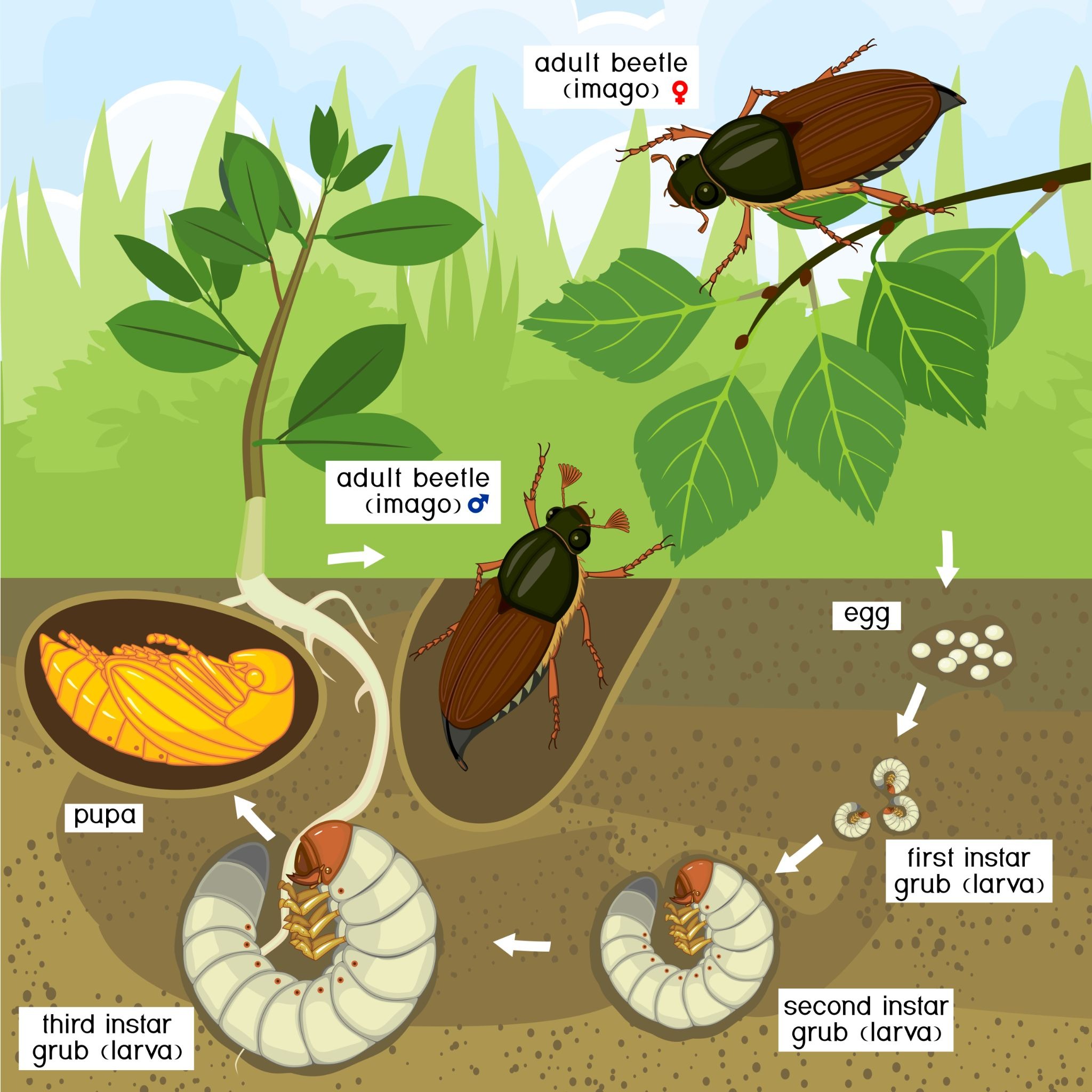
Alt text: Diagram of white grub life cycle
Grubs feed on the grass roots beneath the soil surface, weakening turf and creating ideal conditions for widespread lawn damage. Once an infestation is confirmed, early intervention helps prevent further root loss and improve the lawn's ability to recover.
Effective grub management combines targeted treatments, preventative strategies, ongoing monitoring, and turf restoration practices that strengthen root systems and reduce future pest pressure.
Targeted Lawn Grub Treatments
Curative grub control treatments are designed to reduce active grub populations before they cause extensive root damage. Professional applications target grubs beneath the soil surface where they feed, helping stop further deterioration and protecting remaining healthy turf.
Preventative Grub Control Applications
Preventive treatments are applied before newly hatched grubs begin feeding on grassroots. These applications create a protective barrier that interrupts the grub life cycle and significantly lowers the risk of seasonal infestations developing into severe lawn damage.
Seasonal Lawn Pest Evaluation
During each scheduled service visit, technicians check for signs of grub activity as part of routine lawn evaluations. This helps catch early indicators of grub damage before it becomes widespread and supports timely treatment decisions to prevent recurring infestations year after year. Continuous, season-long grub monitoring is available as an add-on service for homeowners who want closer tracking beyond standard visits.
Lawn Recovery and Root Health Support
After grub activity is controlled, the focus shifts to rebuilding healthy root systems. Proper fertilization, watering, and turf care practices encourage stronger root growth, improve grass density, and help damaged areas recover more quickly from stress and thinning.
Teed & Brown’s Grub Treatment and Lawn Protection Program
Teed & Brown provides targeted grub control treatments and proactive lawn care services that help prevent root damage, reduce pest pressure, and promote healthier turf. Seasonal evaluation and customized applications support stronger, more resilient lawns throughout the year.
Conditions That Increase Lawn Grub Problems
Certain lawn and environmental conditions can make grub damage more noticeable or increase the risk of turf decline.
Weak and Stressed Turf Areas
Lawns already affected by nutrient deficiencies, weed pressure, or environmental stress often have a harder time recovering from grub feeding activity. Healthy turf with strong root systems is generally more capable of tolerating minor pest pressure.
Poor Root Development
Lawns with shallow or underdeveloped roots are often more vulnerable to grub damage. When root systems are already limited, feeding activity can quickly lead to visible turf decline.
Hot Weather and Dry Soil Conditions
Hot temperatures and drought conditions frequently intensify visible grub damage. Grass with damaged roots cannot access available moisture efficiently, causing symptoms to appear more quickly.
Many signs of grub damage in lawn areas become most apparent during the hottest part of the growing season.
Untreated Lawn Pest Activity
Without preventative treatments and routine lawn evaluation, grub populations can increase significantly from year to year.
Why Homeowners Trust Teed & Brown for Lawn Protection
At Teed & Brown, lawn care is built around science-backed treatments and customized programs designed to strengthen turf from the ground up. Our approach focuses on improving root development, enhancing soil health, and preventing common lawn issues before they cause significant damage.
Through services such as lawn fertilization, aeration, overseeding, grub control, weed management, soil improvement, and irrigation support, our team develops treatment plans tailored to each property's unique conditions.
By combining preventative care with regular service visits, we help homeowners maintain stronger, healthier lawns throughout the growing season.
Protect Your Lawn With Expert Care
FAQs
What are the most common signs of lawn grubs?
The most common signs of lawn grubs include brown patches, spongy turf, grass that pulls up easily, thinning turf, and increased bird or animal activity on the lawn.
How can I tell if grubs are damaging my lawn?
Common lawn grub infestation signs can be confusing. The visible damage appears as irregular brown patches, weakened turf, and loose grass. However, the root damage caused by grub infestation is hard to tell. Hence, a professional inspection can confirm whether grubs are responsible for the weakening of your lawn.
Why does grub damage cause brown patches in grass?
Grubs feed on grass roots, reducing the lawn's ability to absorb water and nutrients. As roots become damaged, grass begins to discolor, thin out, and eventually develop brown patches. Since grubs target the roots, it is important to consult an expert before you start any form of treatment.
What time of year should lawns be checked for grubs?
Lawns are commonly inspected during late summer and early fall when grub feeding activity and visible damage are often at their highest levels in the tristate area. Exact timing varies year to year, depending on weather; grub activity can appear earlier or later than usual based on temperature and rainfall.
Can grub damage look similar to drought stress?
Yes. Many symptoms of grubs in grass closely resemble drought stress because damaged roots cannot absorb moisture effectively. A professional evaluation can help identify the cause.
Do professional grub control treatments work for severe infestations?
Professional grub control treatments can help manage active infestations, reduce future pest pressure, and support long-term lawn recovery when combined with proper lawn care practices.
How to check for grubs in a lawn?
If you are wondering how to check for grubs in lawn areas, gently lift a section of damaged turf and inspect the soil beneath. Finding multiple grubs in a small area may indicate a developing infestation. Professional inspections can provide a more accurate assessment of lawn conditions.
What do lawn grubs look like?
For homeowners asking what lawn grubs look like, they are typically white or cream-colored larvae with brown heads and soft bodies that curl into a distinctive C-shape when disturbed. They are commonly found feeding on grass roots just below the soil surface.
Related posts

Best Time to Water Grass: Timing Makes the Biggest Difference in Lawn Health
Grass Seed Growth in Spring: Spot Seeding Strategy for a Healthy Lawn
.jpg)