
.svg)

Frosty Lawns: Understanding Damage, Risk, and Recovery
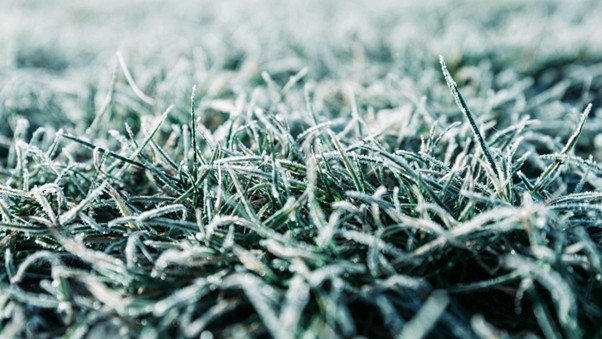
Frosty lawns may look eerily beautiful, calm, and harmless, but they can be one of the most damaging conditions your turf faces. When ice settles on a grass lawn, it changes the physical structure of the blades, making them extremely vulnerable to breakage.
Many homeowners underestimate how quickly frosty lawn damage can occur. A small pressure like a single step across frozen turf or mowing during frost conditions can lead to visible damage that takes months to undo.
Understanding how frost on grass lawn surfaces forms, what it does to turf, and how to respond can make a major difference in protecting your lawn’s health.
Key Takeaways
- Frosty lawns are highly fragile and grass blades become brittle under freezing conditions
- Make sure to avoid walking on frosted grass to prevent damage
- Mowing on a frost-affected lawn can cause long-term visible damage
- The effects of frozen grass damage often appear after the frost melts
- Proper timing and prevention help reduce long-term impact
- Teed & Brown can help you undo persistent lawn discoloration and improve soil health after a long winter season
What is a Frosty Lawn?
Frosty lawns are turf areas covered in a thin layer of ice crystals that form when temperatures drop below freezing, causing moisture on and inside grass blades to freeze. In regions like New York, New Jersey, and Connecticut, this is common during late fall, winter, and early spring due to frequent overnight temperature drops.
Frozen grass becomes brittle, and even light pressure can rupture plant cells, leading to frosty lawn damage. Walking or mowing on frost on a grass lawn can leave visible marks and contribute to long-term frozen grass damage, turning healthy turf into a frost-affected lawn with slower spring recovery.
Understanding How Frost Damages Grass Blades
Ice Crystal Formation Inside Turf Cells
When temperatures drop below freezing, water inside grass blades begins to freeze. This creates ice crystals within the plant cells. These crystals expand and puncture cell walls, disrupting the internal structure of the grass.
Once damaged, the cells cannot function properly, which leads to frozen grass damage and visible decline in turf quality. Even though frost may melt as the sun rises, the internal damage often remains.
Fragility of Frozen Grass
Frost-covered grass becomes stiff and brittle. Unlike healthy grass that bends under pressure, frozen blades snap easily and break.
This is why any activity on a frost-affected lawn can cause long-term damage. What looks like a temporary surface condition is actually a highly sensitive state for the turf.
Frost Damage vs Other Lawn Stress
Identifying Frost Impact on Lawn Surfaces
Discoloration Patterns After Frost Exposure
One of the first signs of frosty lawn damage is discoloration. Grass may appear light brown or gray, patchy in high-exposure areas, and uneven compared to protected sections.
These patterns often show where frost settled most heavily or where the lawn experienced additional stress.
Footprint and Pressure Marks on Frozen Turf
Walking across frost on a grass lawn leaves visible footprints that do not bounce back. These marks occur because the frozen blades break under pressure. In severe cases, these tracks remain visible for weeks, especially during slower growth periods.
How to Protect Frost-Covered Lawns
Damage Caused by Foot Traffic on Frozen Grass
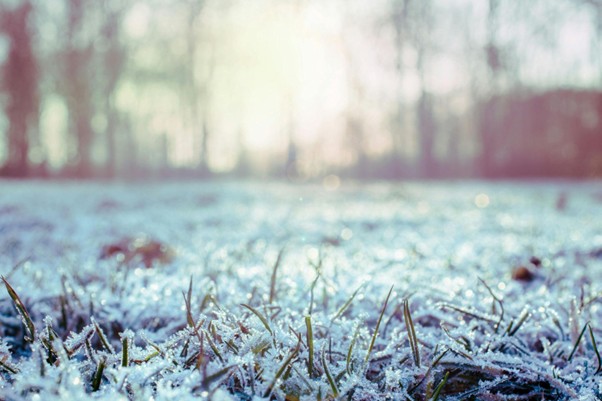
Foot traffic is one of the biggest contributors to frozen grass damage. Even light walking can crush frozen blades, break plant tissue, and create long-lasting visible paths. The safest approach is to avoid stepping on the lawn until the frost has completely melted.
Risks of Mowing During Frost Conditions
Mowing a frost-affected lawn is highly damaging. Mower wheels and blades apply pressure and force that break brittle grass blades, tear already weakened tissue, and increase stress across the entire lawn. Always wait until the lawn is fully thawed and dry before mowing.
Conditions That Intensify Frost Damage
Clear Nights and Rapid Temperature Drops
Frost forms most aggressively on clear nights when heat escapes quickly from the ground. Rapid temperature drops increase the likelihood of heavy frost accumulation, deeper freezing within grass blades, and more severe frosty lawn damage.
Open Areas with High Cold Exposure
Lawns in open spaces are more vulnerable than those with natural protection. Areas without tree cover or wind barriers experience greater temperature fluctuations, stronger frost formation, and increased risk of a frost-affected lawn.
Overwatering or Watering in the Evening
Watering should be handled carefully when dealing with frosty lawns. Avoid watering in the evening, as excess moisture can freeze overnight. In most cases, natural rainfall is enough during colder months, so avoid overwatering.
Signs Your Lawn Needs Professional Help After Frost
Persistent Brown Patches
If your lawn remains discolored and brown weeks after the frost has melted, it may indicate deeper frozen grass damage or poor root health.
Snow Mold or Fungal Growth
White, gray, or pink patches after snowmelt suggest disease pressure that often follows a frost-affected lawn.
Persistent Footprints or Traffic Marks
If footprints remain visible for days, the turf has likely suffered structural frosty lawn damage.
Blackened or Brittle Grass Blades
Dark, wilted, or glass-like blades are signs of severe freeze injury and advanced frozen grass damage.
Thin Growth and Uneven Color
Weak, patchy turf entering spring is a clear sign the lawn needs recovery support.
Soil Compaction or Standing Water
Water pooling on the surface instead of soaking in points to compacted soil and poor root conditions.
Smarter Lawn Protection with Teed & Brown
Managing frosty lawns is not just about reacting to damage. It is about preventing stress before it starts and guiding recovery the right way.
Teed & Brown works with homeowners to monitor seasonal lawn risks, adjust maintenance timing, strengthen turf resilience before winter, and restore lawns affected by frost and other stress factors.
With the right approach, even a heavily frost-affected lawn can recover and return to healthy growth.
Schedule Your Property Consultation Today!
FAQ
Can Teed & Brown help restore frost-damaged lawns?
Yes. Teed & Brown offers customized lawn care programs that address frosty lawn damage, improve soil health, and support recovery through proper fertilization and seasonal treatments.
Do Teed & Brown provide seasonal lawn maintenance programs?
They provide year-round lawn care services, including fall preparation, winter protection strategies, and spring recovery plans to keep your lawn healthy through changing conditions.
Is it safe to walk on a frosty lawn?
No. Walking on a frost on grass lawn can cause significant damage because frozen grass blades are brittle and easily broken.
Can frost permanently damage grass?
Yes, repeated or heavy frost exposure can lead to long-term frozen grass damage, especially if combined with foot traffic or mowing.
How long does frost damage last?
Recovery time depends on the severity. Minor frosty lawn damage may heal within weeks, while more serious damage can take an entire growing season to fully recover.
Related posts
Private Consultation for Your Property.
True lawn care is not about promises-it's about stewardship. We manage each property with intention, precision, and accountability, so you can enjoy complete confidence in who you've entrusted your landscape to.