.svg)

Best Time to Water Your Lawn in Connecticut

Early morning is the best time to water your lawn in Connecticut, specifically between 4:00 AM and 9:00 AM. During this time, temperatures are low, wind is minimal, and water reaches the roots before the sun pulls it back into the air. Your grass gets what it needs, and the blades dry out naturally as the day warms up.
That drying window matters more than most homeowners realize. Cool-season grasses across Connecticut are particularly vulnerable to fungal disease, and a lawn left wet overnight is an open invitation for it. Following a proper Connecticut lawn watering schedule is one of the simplest ways to protect the turf you've worked to build.
Key Takeaways
- Water your Connecticut lawn between 4:00 AM and 9:00 AM to maximize absorption, reduce evaporation, and minimize fungal disease risks.
- Adjust watering schedules seasonally, as cool-season grasses require different moisture levels during spring growth, summer stress, and fall recovery.
- Watch for early drought signals like bluish-gray color, persistent footprints, curled blades, and dry soil before visible damage occurs.
- Avoid overwatering by monitoring for yellow grass, spongy soil, standing water, mushrooms, and increased weed growth across the lawn.
- New grass seed needs frequent, light watering during germination, followed by deeper, less frequent irrigation to encourage strong root development.
- Proper irrigation management, system maintenance, aeration, and soil improvement help reduce water waste, lower costs, and maintain healthier turf year-round.
- With Teed & Brown, get irrigation expertise and turf care that targets the actual cause, not just the symptom.
The Best Time of Day to Water Your Lawn in Connecticut
The best time to water your lawn in Connecticut is between 4:00 AM and 9:00 AM. At this hour, soil temperatures are cool, wind speeds are low, and water penetrates the root zone before midday heat has any chance to pull moisture back into the air.
Why morning works:
- Low Evaporation: Cool morning air means water reaches the roots rather than disappearing before it soaks in.
- Calm Wind Conditions: Wind speeds are usually lower in the early hours, so sprinkler coverage lands where it's aimed.
- Natural Drying Time: Grass blades dry out fully as the day warms, cutting the conditions that lawn fungus needs to establish itself.
Connecticut Lawns Don't Need the Same Watering Schedule Year-Round
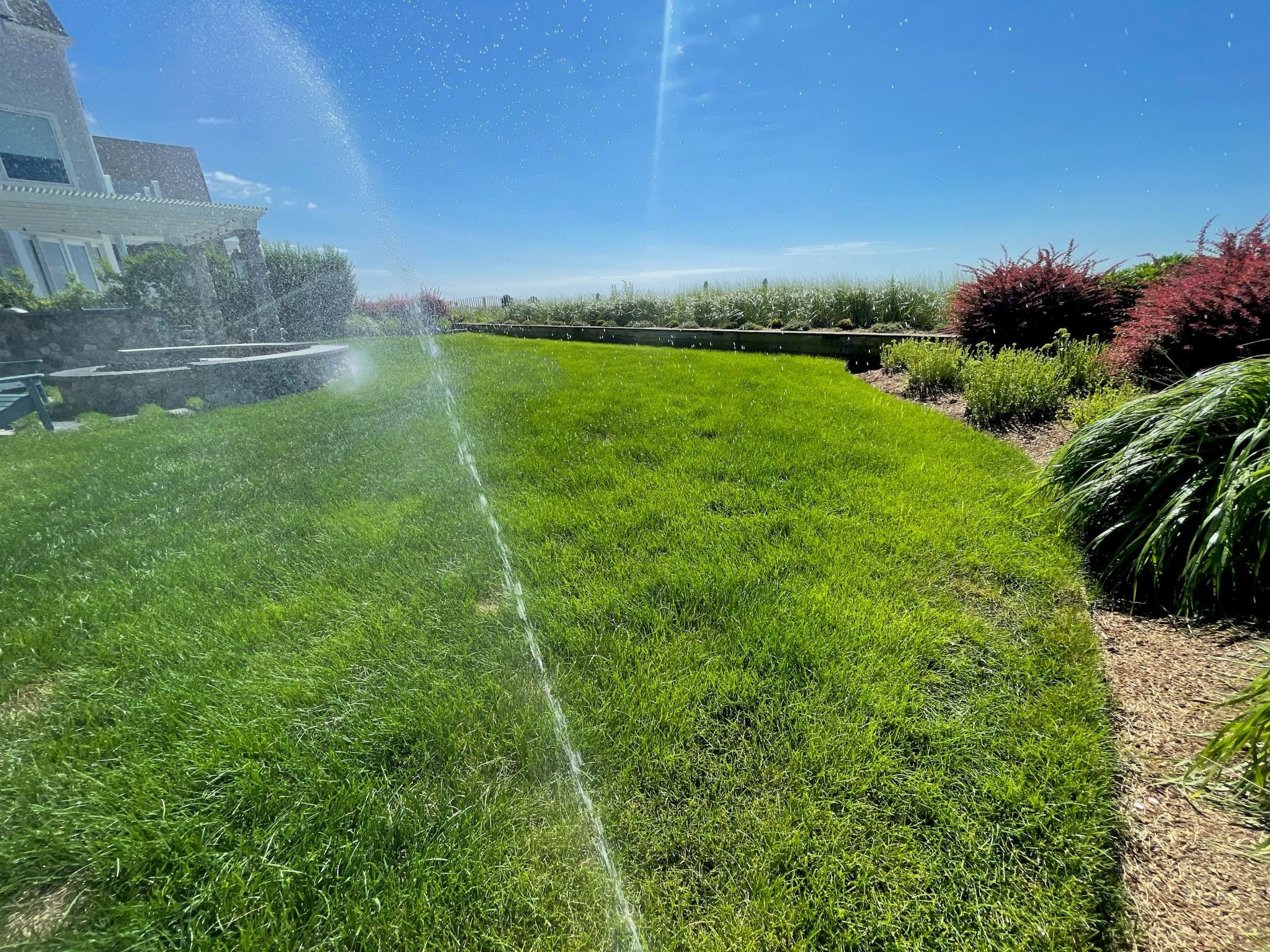
YT Video: https://www.youtube.com/watch?v=bRt_CtxDhsw
Cool-season grasses (Kentucky Bluegrass, Tall Fescue, and Perennial Ryegrass) follow Connecticut's temperature swings closely. Their water needs shift meaningfully from one season to the next, and a fixed sprinkler schedule works against them more often than it helps.
Spring (Late April to June)
- Weekly Water Target: 1 inch total, including rainfall. Water 1 to 2 times per week.
- Watering Depth: Soak the top 6 inches of soil to push roots deeper before summer heat arrives.
- Rain Adjustment: Skip scheduled watering entirely if rainfall hits 1 inch or more that week.
Summer (July to August)
- Weekly Water Target: 1.5 to 2 inches. Water 2 to 3 times per week.
- Best Time to Water Lawn in Connecticut: Between 4:00 AM and 9:00 AM to cut evaporation loss and reduce fungal pressure.
- Dormancy Note: Brown turf in August is normal for Kentucky Bluegrass and Fine Fescue. It signals stress-induced dormancy, not disease or death.
Fall (September to November)
- Weekly Water Target: 1 to 1.5 inches. Once per week is typically enough as temperatures cool.
- Morning Dew Adjustment: Cut back to around 0.5 inches per session when heavy dew becomes consistent in October.
- Irrigation Shutdown: Keep watering on a Connecticut lawn watering schedule until your system is winterized, typically around Thanksgiving.
Winter (December to Early April)
- Weekly Water Target: None.
- When to Stop: Shut down irrigation when temperatures consistently stay below 40°F, and the ground begins to freeze.
- Why it Matters: Frozen soil cannot absorb water. Applying it risks ice formation in the turf crown, which causes direct tissue damage.
Signs Your Lawn Is Asking for Water
Your lawn won't wait until it turns brown to signal a water problem. Connecticut's cool-season grasses show stress well before visible damage sets in, and catching those early signs is what separates a lawn that recovers quickly from one that loses density heading into the season.
Key Indicators to Watch For
- Color Shift: Turf that shifts from vibrant green to a dull bluish-gray or silvery tone is losing chlorophyll. This color change typically shows up days before visible browning.
- The Footprint Test: Walk across the lawn and look back. Footprints that stay pressed down for more than 30 seconds mean the grass has lost its normal resilience and needs water.
- Blade Curling: Grass blades fold lengthwise to reduce sun exposure when moisture runs low. Blades that look rolled or taco-shaped are a clear sign the turf is conserving what little water it has left.
- Audible Crunch Underfoot: Dry turf produces a crunching sound when stepped on, even when the grass still looks green. Sound is a useful check when color alone isn't telling the full story.
- The Screwdriver Test: Push a 6-inch screwdriver into the soil. Resistance before the 4-inch mark, or a bone-dry tip when pulled out, means the root zone is too dry.
- Soil Edge Cracking: Gaps or cracks forming along driveways, curbs, or lawn borders mean soil moisture has dropped far enough for the ground to contract.
Signs You're Watering Too Much
Your lawn gives clear physical signals when it's getting more water than it can use. Waterlogged soil cuts off oxygen to the root zone, setting off a chain of problems that only worsen the longer irrigation continues unchecked.
What to Look For
- Yellow or Pale Green Grass: Roots starved of oxygen lose their ability to pull nutrients from the soil, and the turf color reflects it.
- Spongy Turf Underfoot: Soil that compresses like a wet sponge or squishes with each step is holding far more water than it should.
- Fungal Growth and Mushrooms: Consistently damp conditions are ideal for mold, powdery mildew, and mushroom clusters, especially in low-light areas of your lawn.
- Standing Water or Surface Runoff: If puddles linger for hours after your sprinkler schedule runs, the soil is already saturated and can't absorb more water.
- Weed Pressure: Nutsedge, crabgrass, and creeping weeds thrive in wet soil. A sudden uptick in weed activity often points to chronic overwatering.
- Rapid Thatch Buildup: Excess moisture encourages shallow root systems and accelerated surface growth, which speeds up the dead organic layer between your soil and live turf.
Watering New Grass Seed in Connecticut
New grass seed needs the top half-inch of soil to stay consistently damp throughout germination. Water lightly two to three times a day during the first two weeks, then gradually shift to deeper, less frequent sessions as roots take hold.
Week 1 – 2 (Germination)
- Frequency: 2 – 3 times a day.
- Duration: 5 – 10 minutes per zone. Keep the soil surface damp without creating puddles or washing seeds away.
Week 3 – 4 (Early Growth)
- Frequency: Once a day.
- Duration: 15 – 20 minutes. Longer sessions push moisture deeper, training young roots to grow downward.
Week 5 and Beyond (Establishment)
- Frequency: 1 – 2 times a week.
- Duration: Deep watering to deliver 1 to 1.5 inches per week, including rainfall. Cool-season grasses like Fescue, Ryegrass, and Kentucky Bluegrass need this depth to build drought resistance.
Lawn Watering Mistakes That Cost Connecticut Homeowners Money
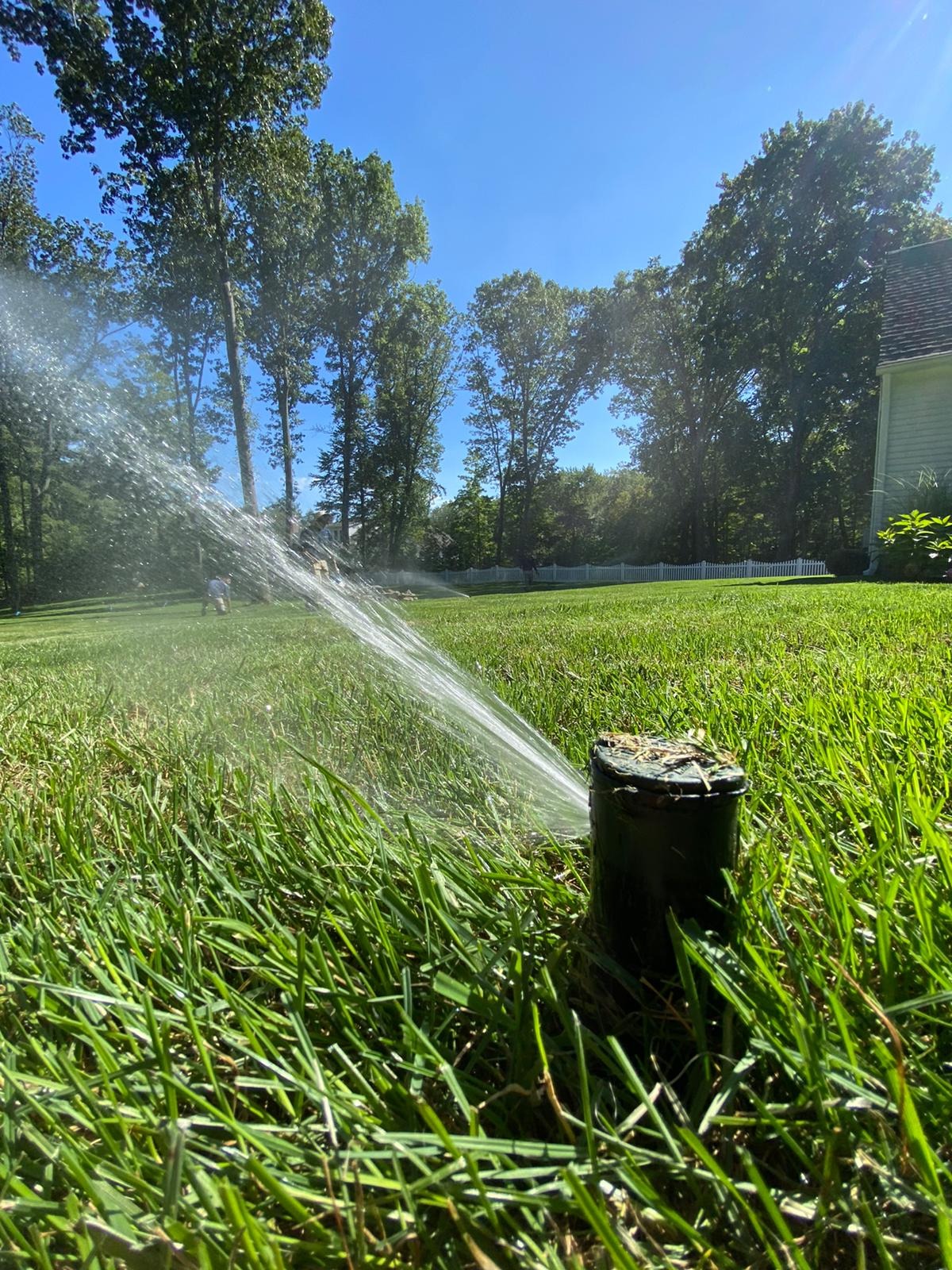
Most lawn watering problems aren't visible until the bill arrives. Poor timing, ignored leaks, and fixed schedules can quietly add hundreds of dollars per season, especially in Connecticut, where many water providers bill for both water supply and sewer usage on the same meter.
Watering Every Day in Small Amounts
- Shallow Root Development: Daily light watering keeps moisture at the surface, training roots to grow up instead of down. Shallow-rooted cool-season grass demands far more water to survive dry spells, and that compounds your costs.
- Higher Volume, Less Return: Short daily cycles rack up the same usage as deep, infrequent watering without the turf resilience. You pay the same utility rate for results that don't last.
Running the Sprinkler at the Wrong Time
- Midday Evaporation Losses: Summer heat evaporates a large share of every gallon before it reaches the root zone. Early morning is the best time to water your lawn in Connecticut, when low wind and cooler air reduce how long your system needs to run.
- Overnight Watering and Fungal Damage: Wet turf left damp through the night invites fungal disease. That damage costs far more to treat than a corrected sprinkler schedule in Connecticut would have cost to begin with.
Overlooking System Leaks and Misaligned Heads
- Wasted Volume, Invisible on the Lawn: A broken sprinkler head or slow underground leak can waste thousands of gallons per month with no visible turf change.
- Watering Pavement Instead of Turf: Misaligned heads pointed at driveways or foundations add to your primary meter reading, which most Connecticut towns use to calculate your sewer fee.
How Teed & Brown Helps Homeowners Address Water Management Issues
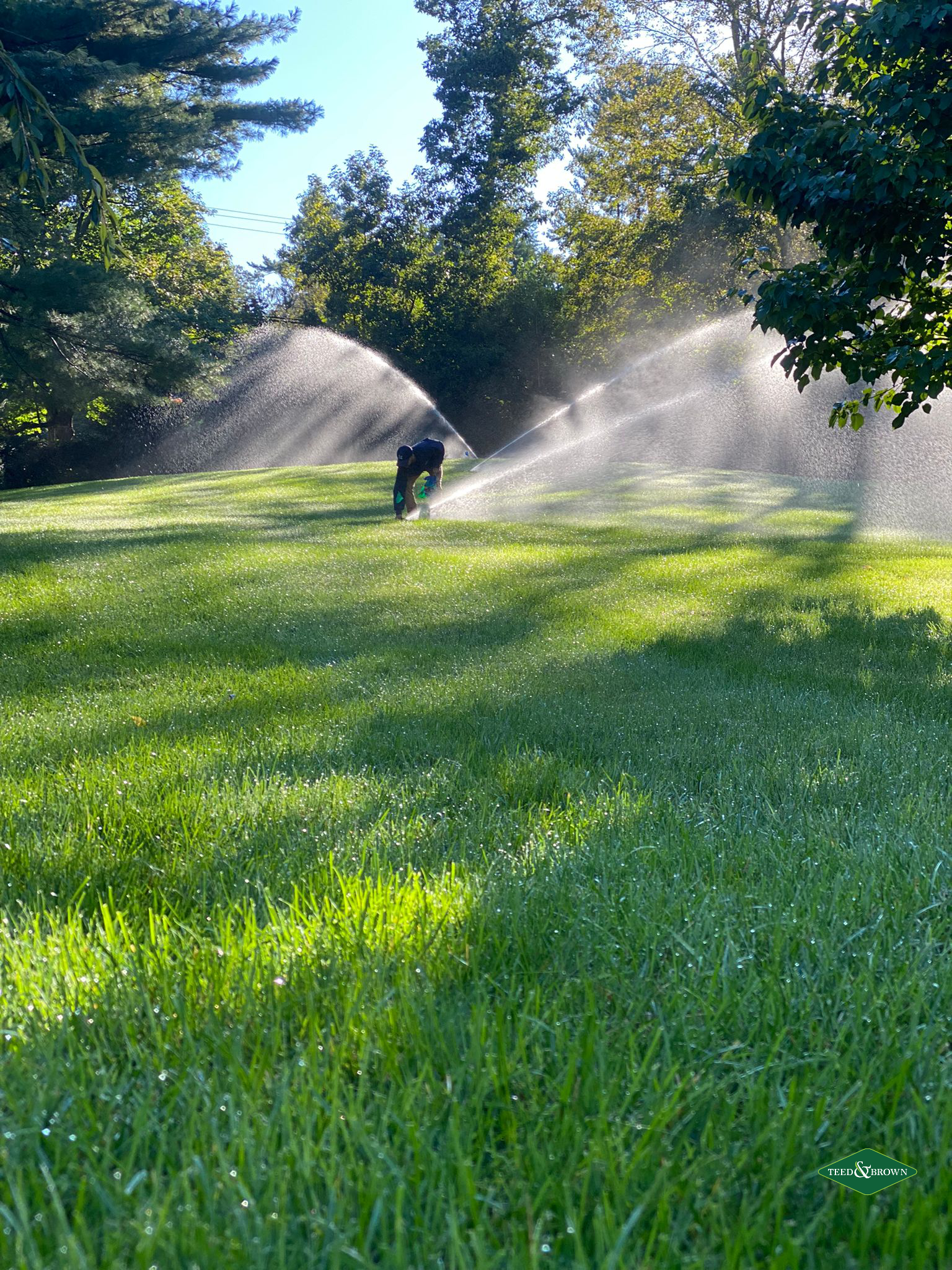
A precise Connecticut lawn watering schedule means nothing if the system behind it is leaking, uneven, or set to the wrong cycle. Teed & Brown combines precision lawn irrigation with science-backed turf care to fix the root causes of overwatering, dry zones, and poor drainage.
- Irrigation Audits: Certified specialists evaluate your existing system on-site, pinpointing hidden leaks, uneven coverage, and zones that receive too much or too little water.
- Controller Management: T&B adjusts your sprinkler schedule in Connecticut based on seasonal turf demand, keeping cool-season grass hydrated without the overwatering that invites disease.
- Aeration and Overseeding: Compacted soil stops water from reaching the root zone. Aeration corrects that, and overseeding restores the thin areas that suffer most during dry spells.
- Compost Applications: Applied to heavy clay soils, nutrient-rich compost corrects drainage problems and helps your lawn hold moisture more evenly between watering cycles.
- Weekly Concierge Program: A T&B professional visits your property regularly, adjusting care based on actual on-site conditions rather than a fixed schedule.
Conclusion
Watering your Connecticut lawn at the right time is a strong start, but it only gets you so far. Soil health, root depth, and irrigation coverage have to work together, and when one slips, the turf pays for it.
Teed & Brown has spent over 20 years helping homeowners across Connecticut, New York, and New Jersey get that balance right. Contact T&B to get a lawn care plan built around your property.
FAQ
What is the best time to water your lawn in Connecticut?
Early morning, between 4 AM and 9 AM, if you can, is the best time to water your lawn in Connecticut. The grass absorbs moisture before the heat sets in, and the surface dries quickly enough to avoid fungal issues.
How often should I water my lawn during a Connecticut summer?
Most lawns need about one inch of water per week, split across two or three sessions. During heat waves or dry spells, you may need to water more frequently to prevent the turf from going dormant.
Is it bad to water grass at night?
Morning watering is generally preferred because it gives the grass time to dry before temperatures drop, reducing the risk of fungal disease. That said, watering at night is far better than not watering at all. If morning isn't an option, watering at night is still the right call for your lawn.
When should I stop watering my lawn before winter?
You can typically stop regular watering in late October, once temperatures consistently drop below 50°F. At that point, the grass has slowed its growth, and the soil retains enough moisture on its own.
What are the signs of underwatered grass?
Grass that curls, turns a dull bluish-gray, or doesn't spring back after you walk on it is telling you it needs water. A reliable Connecticut lawn watering schedule built around the best time to water your lawn in Connecticut keeps these stress symptoms from developing in the first place.
What if my city has watering restrictions?
Water as much as your local restrictions allow, on the days you're permitted to. Beyond that, your lawn will rely more on rainfall to fill the gaps, which means results may vary more with the weather than they would with a full watering schedule.
What if I can't water in the morning?
Water whenever you're able to. The most important thing is that your lawn gets consistent moisture; a watering schedule you can actually stick to will always beat a "perfect" schedule you can't follow.
Related posts

Best Time to Water Grass: Timing Makes the Biggest Difference in Lawn Health
Grass Seed Growth in Spring: Spot Seeding Strategy for a Healthy Lawn
.jpg)